

What is portland cement? As one of the most common cements used in constructions, it is important to know the definition, history, characteristics and also types of portland cement.
So, without further ado, let’s dive down and see the explanation about this cement below!
What is Portland Cement?

As we stated above, the Portland cement is the most common type of cement commonly used around the world as a base material for concrete, mortar, and non-specialized mixing in construction
Also Read


This cement was developed from another type of hydraulic lime in Britain in the middle of the 19th century, and is usually derived from limestones.
It has a fine powder form that is produced by heating clay stones and clay minerals in plantations to form clinkers, grinding clinkers, and adding a small amount of other materials.
There are several types of this cement available, the most commonly called ordinary portland cement (OPC). Any other portland cements types are:
- Portland Cement Type I: Can generally be used in construction of buildings that do not require special requirements for heat hydration and initial compressive strength. It is commonly used for residential houses, floors and highways and is suitable for use in construction sites that are far from the coast and with low sulfate levels.
- Portland Cement Type II: Can generally be used as a building material that is placed on the shores of the sea, slums, ponds, docks and dams. They are resistant to sulphuric acid levels of 0.1-0.2 percent and moderate heat hydration.
- Portland Cement Type III: This type of cement has a high initial compressive strength and a fast dry that is usually used on high-rise buildings, concrete roads, highway and airports and in-water buildings.
- Portland Cement Type IV: Generally requires low hydration heat and usually requires a short hardening process time to avoid cracks. They are often used for dams and airfields.
- Portland Cement Type V: Usually used for construction of buildings that require high resistance to sulphuric acid of more than 0.2 per cent such as in reservoirs, seawaters, coasts, mining areas to nuclear power plants.
Its name derives from its similarity to the Portland stone that was mined on Portland Island in Dorset, England.
The main characteristics of this type of cement is its caustic nature, so it can cause chemical burns. It also can cause irritation or, with severe exposure, lung cancer, and may contain some harmful components; such as silica crystals and chromium hexavalent.
Its main concern is the high energy consumption required to mining, producing, and transporting cement that can cause an air pollution, including greenhouse gas emissions (e.g., carbon dioxide), dioxins, NOx, SO2, and its particles.
But, on top of that, the low cost and availability of limestone, debris, and other natural materials that are widely used in this cement makes it one of the lowest-cost materials that has been used throughout the last century worldwide.
Also Read: “7 Types of Cements and Its Uses“
History of Portland Cements
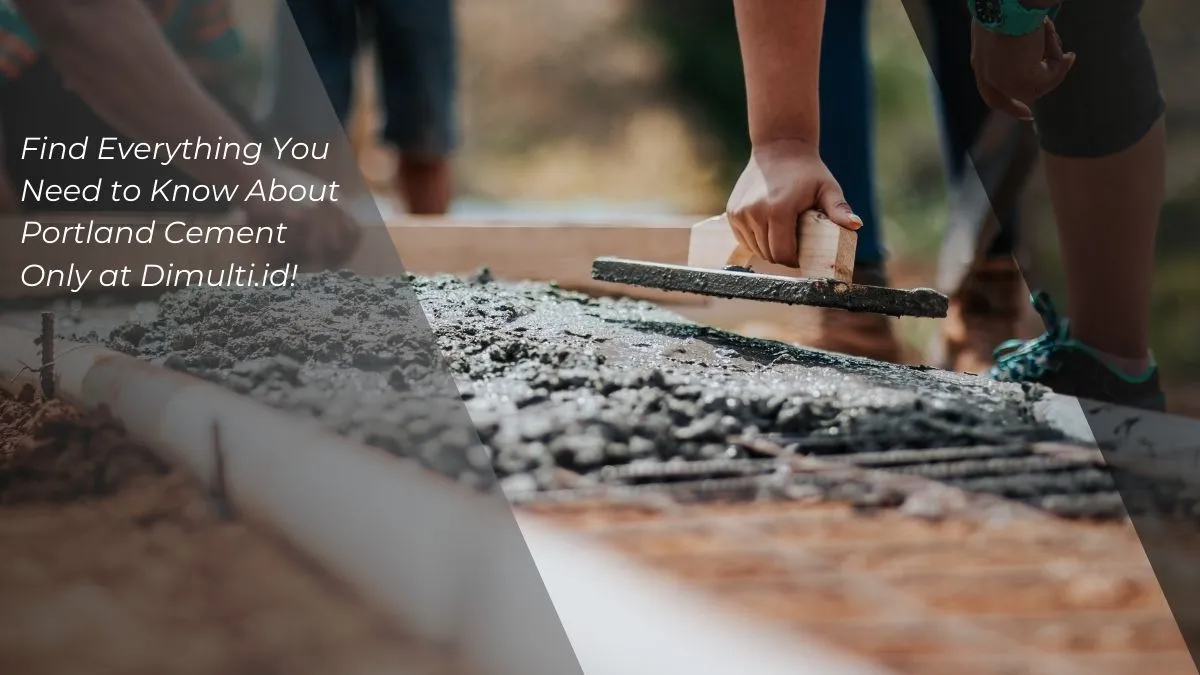
This type of cement has been around for centuries, and has been a staple material used in the world of constructions.
Here is the timeline of the history of portland cement.
- 1756: The development of portland cement started when John Smeaton experimented with limestone and other additives such as pozzolana.
- 1796: James Parker developed and patented a cement called “Roman Cement” that serves as the blueprint for portland cement that we know of today.
- 1811: James Frost produced a cement that was called “Britain Cement”.
- 1848: William Aspdin invented a cement that is considered as the first “modern” portland cement.
The development of this type of cement has always been ongoing even after the first time WIlliam Aspdin invented the first modern portland cement.
With John Grant, Friedrich Hoffman, Frederick Ransom further developing and inventing a mixture of an even stronger form of this type of cement shortly after it’s being invented.
Also Read: “5 Types of Pipes Used in Construction“
Characteristics of Portland Cements

- The main characteristics of this type of cement is it will harden when mixed with water.
- A clay-like texture that can be spread for a short time after mixed with water, then it will harden after some time.
- Cannot be soluble in water after it’s hardened.
- Can act like a glue.
- Caustics
- Can cause irritation or even lung cancer.
So there you are an article about “what is portland cement” along with its history, types and characteristics in one go!
As one of the most important materials used in construction, the safety and quality of this cement is strictly regulated in Indonesia.
It needs to undergo a series of rigorous tests to confirm its safety and also quality, making it one of many products that is mandatory to have an SNI certification.
The SNI certification itself is a series of regulations that controls the safety and quality of products and services marketed and sold in Indonesia.
The SNI for portland cement itself is stated in SNI 15-2049-2004.
To have the SNI certification on your products is so beneficial as it can be used to boost the trust from the Indonesian market to your products.
So, if you’re interested in registering your portland cement for the SNI certification, kindly check this link!