

What is an air conditioner compressor and how does it work? Almost every house today uses an air conditioning to keep the room cool.
One component that is present in the air conditioning and plays an important role is the air compressor. How does this air compressor work? Knowing which component of this one is crucial so you can treat it properly.
Then, let’s go deeper into what an AC compressor is and how it works below!
Also Read


What is an Air Conditioner Compressor?
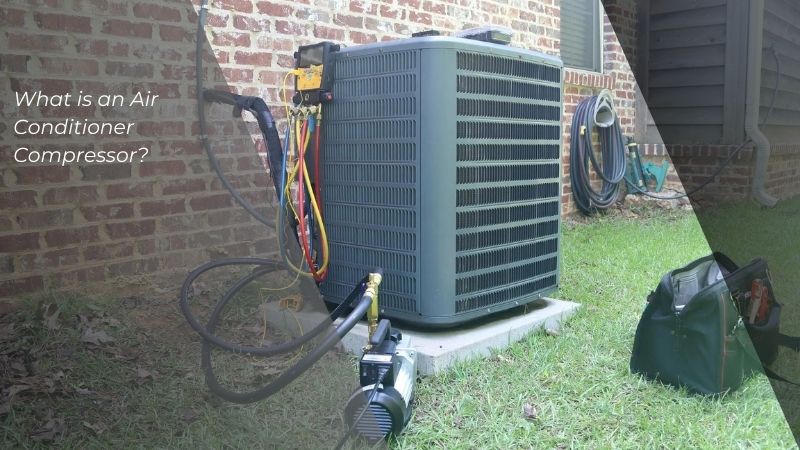
When talking about the comfort of an air-conditioned room, an AC compressor is the core component that supports the functioning of the system.
This component plays a role in converting the refrigerant gas into a liquid form, regulating the pressure, and keeping the cooling cycle running efficiently.
It is important to understand that the way an AC compressor works is not limited to a simple process, that is, sucking and pushing cold air.
On the contrary, it involves transforming the refrigerant gas from the gas phase into liquid and back again.
The AC compressor has 4 main functions, such as:
- Increase the Refrigerant’s Pressure: The AC compressor is responsible for increasing the pressure of the refrigerant gas, ensuring that the gas can be converted into a liquid form efficiently.
- Pushing the Refrigerant into Condenser: Once the pressure of the refrigerant increases, the compressor works to push the liquid refrigerants into the condenser. This triggers an increase in temperature and starts the heat transfer process that supports the cooling cycle.
- Keeping the Cooling Cycle: The AC compressor is also responsible for keeping the cooling cycle smooth. When controlling the pressure and temperature of the refrigerant, the compressor ensures that the process of transformation from gas to liquid and vice versa takes place consistently.
- Providing Mechanical Energy: As a primary power source, compressors provide the mechanical energy needed to run the entire air cooling system. This includes pumping refrigerants, and moving other mechanical components.
How does the AC Compressor Work?

How does an air-conditioning compressor work to cool the room? The way this component works is divided into two phases, a compression cycle and a phase-changing cycle.
Let’s break it down here!
1. Compression Cycle
This compression cycle process starts from the evaporator, where the refrigerant gas is sucked by the compressor. At this early stage, the gas is still in the form of low pressure and temperature.
During the compression process, the refrigerant gas is pressed and compressed, thereby increasing pressure and temperature significantly.
At a certain point, the compressed gas is released into the capacitor as a hot gas. This is the beginning of the next phase in the cooling cycle.
This process is similar to creating the heat energy needed to support the heat transfer and cool the room.
Therefore, the compression cycle is the primary foundation of how an AC compressor keeps the air in the room cool and comfortable.
Also Read: “5 Types of Air Conditioner“
2. Phase-Changing Cycle
The AC compressor has an important role in controlling the phase of the refrigerant gas. As the pressure increases during the compression process, the refrigerant gas turns into a liquid form.
The refrigerant then flows through a phase of expansion, where the pressure and temperature drops drastically.
At this point, the refrigerant returns to the gas phase and is ready to start the cycle back from scratch.
This phase change not only determines the extent to which the AC compressor is able to produce cooling, but it is also an important element in gaining the desired temperature balance.
So there you go, the explanation about the AC compressors!
Choosing the right one might be important for you, but choosing THE safe one is a concern to look for too.
The AC compressor is one of many other products that needs to be certified by the SNI certification.
The SNI certification is the type of approval to ensure that every product and service in Indonesia is within the Indonesian standards of safety and quality.