
What is a fire sprinkler? A fire sprinkler is a device that is usually installed inside a building that serves the purpose as a fire suppression system.
These devices are an effective tool to detect and prevent the fire from spreading.
But despite its usefulness, many of you still don’t know about these devices, so in today’s article we will completely explain to you the definition of a fire sprinkler.
Also Read

And on top of that, we will provide you with the information about the component of the fire sprinkler itself.
This might be interesting, so buckle up and let’s dive into it down below!
Table of Contents
What is a Fire Sprinkler?
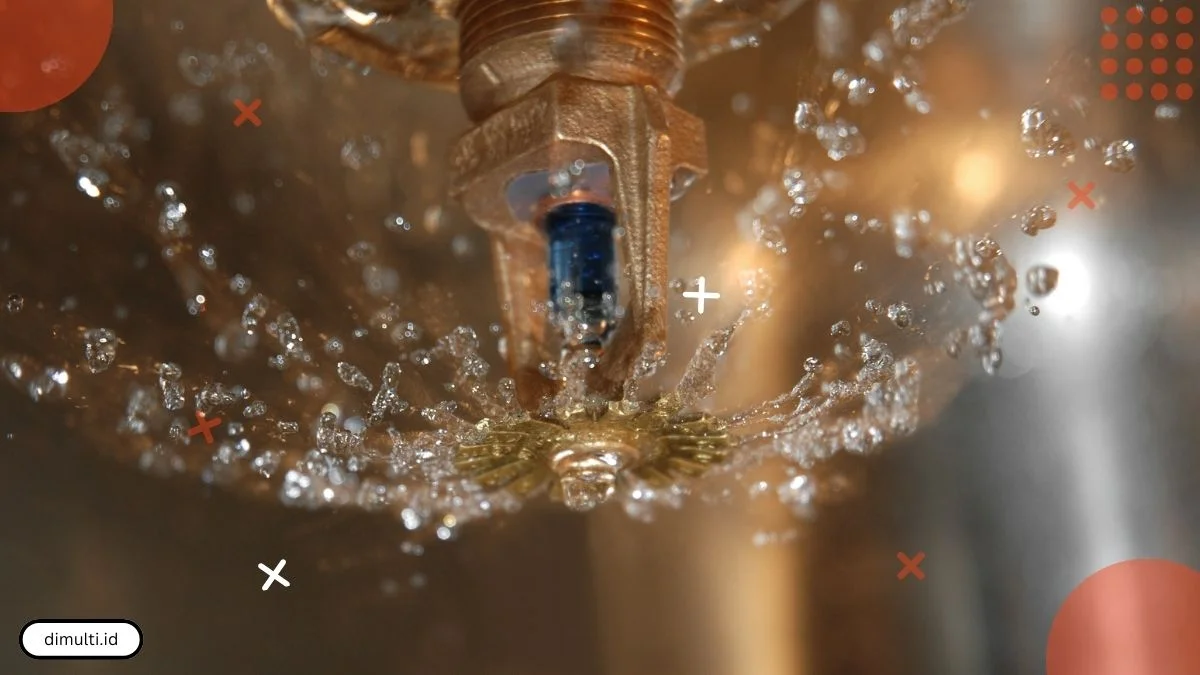
Fire sprinkler is an automatic fire extinguisher that is specifically designed to detect and respond quickly to a fire. The system consists of pipes equipped with sprinklers mounted on the ceiling.
The fire sprinkler works by detecting the overall temperature of a room or areas, when the temperature around the sprinkler reaches a certain point as a result of a fire, it opens automatically and sprays water to extinguish the fire.
The system is very effective in preventing the fire from spreading and reducing any further damage and also preventing any possible casualties.
And it also worth noting that this device is divided by certain types, which is:
- Upright Sprinkler: Which is the most common type that is mounted on the ceiling and extends downward from the ceiling.
- Pendant Sprinkler: That hangs from the ceiling and from the horizontal pipes that are suitable for the building with a high ceiling.
- Sidewall Sprinkler: This type of sprinkler is mounted directly on the wall and is suitable for the building that has a limited space on its ceiling.
- Concealed Sprinkler: As its name implies, it is concealed to maintain the aesthetic aspect of the room.
Components of the Fire Sprinkler

The fire sprinkler system consists of several main components. Each component works together in the system to detect, control, and extinguish a fire in the case of fire.
1. Sprinkler Head
The first and the most obvious one is the sprinkler head. The sprinkler head consists of a temperature sensor that will react if the temperature around the room is increasing.
The sensor is usually shaped like a bulb that is filled with a heat sensitive liquid that will react to the increasing temperature.
When the temperature around the head is reaching a certain point (which is about 68 C or 154,4 F) the liquid inside the bulb will expand and increase the pressure inside the bulb.
As the pressure increases, the bulb will break and open the valve on the sprinkler head, spraying the water.
Also, another thing to know is that only the sprinklers that are exposed to direct heat will be activated.
2. Pipes
Pipeline networks are components installed throughout the building that serve as channels to flow water from the main water source to the sprinkler head.
Also, these pipes are usually made of iron or galvanized steel to ensure strength and corrosion resistance thus improving its lifespan and are usually designed with branches connected to the sprinkler head in any rooms or areas.
Also Read: “Fire Suppression System Maintenance“
3. Water Source
A water source is a vital component of a fire sprinkler system that serves to provide a water supply that is then used to extinguish a fire.
Pay attention to the availability of the water and also the water pressure, because sufficient water availability and pressure are essential to ensuring the efficiency of the system.
4. Valve
The next one is the fire valve that serves to control the flows of the fluid to the sprinkler head.
This component is also vital to the entire sprinkler system, as the fire valve will ensure that the water only flows to the designated area when the fire occurs.
5. Control Panel
The control panel is the control center of the fire sprinkler system. It is an electronic or mechanical device that monitors and controls the operation of the sprinkle system.
The control panel provides you with an important information about the system’s status, including water pressure, water flow, and the overall condition of the sprinkler head.
Also Read: “NFPA Fire Classification“
So there you have it! The thorough explanation of the fire sprinkler alongside of its functions and also components in the fire systems!