
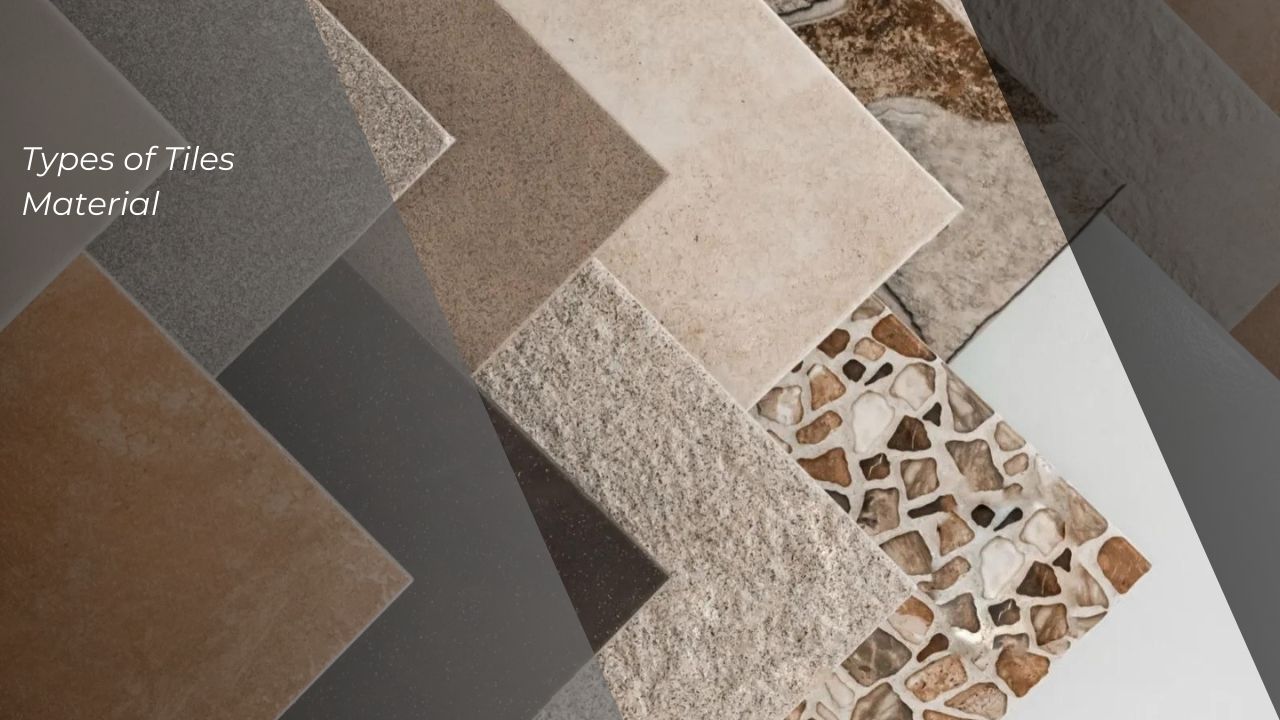
Types of Tile Material – Selecting the perfect floor material, whether tile or solid-surface slabs, involves a thoughtful decision-making process.
Several key factors come into play, including the material’s origin (natural stone vs. man-made), its ability to handle everyday wear and tear, stain and water resistance, and how easy it is to maintain.
To simplify this process for you, we’ll delve into the various types of tiles available and explore the areas of your home where each one shines.
Also Read


Types of Tile Material

1. Ceramic
Many clay tiles, hardened by high heat in a kiln, fall under the umbrella of ceramic tiles.This category offers two main choices: porcelain, known for its exceptional durability, and regular ceramic.
Interestingly, regular ceramic tiles are often simply referred to as “ceramic” in stores.Made from red clay, like terra cotta, or white clay, these tiles offer a good balance of affordability and functionality.
To help you choose the right ceramic tile for your needs, keep an eye out for the PEI rating system.
Developed by the Porcelain Enamel Institute, this rating provides valuable insight into how well the tile will hold up to wear and tear in different areas of your home.
- PEI Class 1: Light Duty (Walls Only) – These tiles are designed for wall use only in residential and commercial settings, as they cannot withstand foot traffic.
- PEI Class 2: Light Traffic – Suitable for both walls and bathroom floors with light foot traffic.
- PEI Class 3: Moderate Traffic – These tiles can handle light to moderate foot traffic and are ideal for countertops, walls, and floors in most residential areas.
- PEI Class 4: Heavy Traffic – Durable enough for all residential applications, along with medium commercial and light institutional use where there is moderate to heavy foot traffic.
- PEI Class 5: Very Heavy Traffic – The toughest of the bunch, these tiles can endure heavy to extra-heavy foot traffic, making them suitable for any residential use and even heavy commercial and institutional environments.
2. Porcelain
Porcelain tile takes toughness to a whole new level. Unlike ceramic, it’s crafted by firing clays at scorching temperatures, resulting in a denser, smoother, and practically water-resistant tile.
This makes porcelain a champion in cold climates, as it absorbs minimal water that could freeze and cause cracks.
Glazed porcelain adds another layer of protection, boasting exceptional resistance to scratches and wear.
These qualities make porcelain a versatile choice for nearly any indoor residential application, from high-traffic areas to bathrooms.
However, this resilience comes at a cost. Cutting porcelain requires specialized tools and expertise that most basic tile saws simply can’t provide.
This often means hiring professional installers, which can add up on larger projects.
Additionally, the intense manufacturing process makes porcelain inherently more expensive than ceramic tile.
So, while porcelain offers unmatched durability, it’s important to weigh the cost and installation considerations before making your choice.
Also Read: “7 Types of Flooring Material“
3. Limestone
The next types of tile material to consider is the limestone. Limestone offers a natural stone look at a more wallet-friendly price compared to marble or slate.
Formed from ancient sea creatures over millions of years, it comes in earthy tones like beige, gray, and off-white.
While less dense than some stones, dolomitic limestone can be polished to a shine.
Think structural walls, entryways, floors, fireplaces, vanities, and shower walls – limestone thrives in these areas.
However, skip the kitchen countertops and wet bars. Its porous nature makes it susceptible to stains from acidic liquids like fruit juices and alcohol. Scratches are also a concern.
Installation requires a bit more attention due to its softness. Cracking and breakage are more likely compared to harder stones.
Additionally, its porosity means grout can seep in during installation, adding a layer of complexity.
4. Marble
Marble adds a touch of timeless elegance, but be prepared for the pampering it requires.
This natural stone starts as limestone, transformed by heat and pressure over millions of years.
Unlike granite, marble boasts beautiful veins and comes in a variety of colors. However, its softness makes it less ideal for high-traffic areas.
Marble’s beauty comes at a premium, often double the cost of ceramic tile and even more for certain varieties. Installation is another hurdle.
Marble’s delicate nature demands specialized tools and professional handling to avoid costly breakage.
So, while marble elevates any space, be prepared for the investment and expert installation.
5. Onyx
Onyx stands out with its captivating colors and textures. This gemstone, formed from limestone, comes in a range of blues, greens, browns, whites, and even pinks, depending on its iron content.
Each tile is unique, offering a rich, one-of-a-kind look that makes it perfect for decorative accents.
Despite its higher-end status and surprising durability with proper care, onyx is softer than quartz or granite. This makes it more prone to scratches and nicks, so forget about high-traffic areas.
Onyx kitchen countertops are a recipe for disaster, as acidic foods like lemon juice or vinegar can easily stain or chip the surface.
Think of onyx as a statement piece for areas with minimal wear and tear, like bathroom walls, accent walls, fireplace surrounds, or even vanity countertops.
Keep in mind that onyx is porous and requires sealing to prevent staining and water damage. So, if low-maintenance is a priority, onyx might not be the best choice.

6. Granite
Granite isn’t called a “hard stone” for nothing! This naturally occurring beauty forms deep underground under intense heat and pressure.
The result? A quartz-based rock known for its incredible strength, durability, and stunning patterns.
Unlike other stones, polished granite stays shiny practically forever and cleans up in a flash.
This translates to tons of possibilities for your home – countertops, wet bars, floors, walls, fireplaces, even bathroom vanities. Flamed or honed finishes (less shiny) offer even more design flexibility.
Keep in mind, though, that no two granite tiles are identical – each one is a unique piece of nature’s art. To maintain that beauty, resealing the stone periodically is a must.
The downside? Granite comes with a premium price tag. Installation can also be a budget consideration.
Granite’s weight, irregular edges, and sheer hardness make DIY installation tricky. Professional installers have the tools and expertise for precise placement and cutting.
Also Read: “SNI Certification for Ceramic Tile in Indonesia“
7. Slate
Looking for a touch of earthy elegance? Look no further than slate! This metamorphic rock, formed from compressed shale, is prized for its durability and natural charm.
Composed mainly of micas, chlorite, and quartz, slate is a tough customer, perfect for high-traffic areas like floors, walkways, and even countertops.
Available in a range of blacks, grays, and greens, with occasional splashes of other colors, slate offers a unique character.
The surface texture can vary, with honed finishes offering a smooth touch, and the natural cleft pattern adding a distinctive appeal. For those who crave a natural aesthetic in high-traffic areas, designer Kendra Nash recommends slate. It “wears nicely” and boasts a “gorgeous texture” that transcends trends.
Be prepared for a steeper price tag compared to other tiles, and professional installation is a must.
The porous nature of slate requires sealing both during installation and afterwards for optimal protection.
Due to the cost and installation complexity, some homeowners choose to reserve slate for statement areas like entryways.
8. Types of Tile Material: Travertine
Travertine is a unique type of limestone formed by mineral-rich hot springs. Similar to marble, it’s less dense and more porous.
Those signature pits in travertine? They’re actually trapped air bubbles from its formation.
Color-wise, think light beige to brown. You can choose a honed, natural finish or have the holes filled and polished for a shiny look.
Interior designer Nash highlights the appeal of travertine’s natural beauty, just like marble, slate, and limestone.
Where does travertine shine? Entryways, floors, fireplaces, vanities, showers, and mosaics. Steer clear of kitchen countertops and wet bars though.
Scratches and stains from acidic liquids are a concern. This natural stone requires special care, as some cleaners can damage it.
DIY enthusiasts beware: travertine’s hardness demands specialized cutting tools. Grouting can also be tricky due to its porosity, and sealing before grouting is crucial.
9. Metal
While not as common as other options, metal tiles offer unique design possibilities. Available in various materials, finishes, and textures, they can elevate your space.
Stainless steel is a popular choice, known for its sleek and reflective surface, perfect for modern kitchens.
For a more subdued look, opt for brushed nickel. Want a rustic touch? Copper or bronze tiles might be the answer.
Just keep in mind that copper can oxidize and turn green over time. Some homeowners embrace this natural patina, while others choose to seal the tiles to prevent it.
Metal tiles are tough and handle temperature changes well, making them ideal for kitchens. Stainless steel backsplashes are popular due to their easy maintenance and ability to complement stainless steel appliances.
You can also use metal tiles on ceilings, accent walls (sometimes paired with warm materials like wood or leather), or even textured tiles on floors for better grip in high-traffic areas like stairs or entryways.
Another bonus: metal tiles are non-porous and generally easier to clean than stone tiles, often requiring just water and mild soap (with stainless steel needing a specific cleaner sometimes).
Plus, they often don’t require grout, as they fit together snugly, simplifying installation compared to stone.
Remember, metal conducts electricity, so be extra cautious when installing them near electrical outlets or wiring.
10. Mosaic
Mosaic tiles, unlike their larger, square-cut counterparts, offer a world of design possibilities.
Typically measuring less than 2 square inches, they come in various materials and shapes like squares, hexagons, and rectangles.
These tiny tiles are pre-arranged on mesh sheets, simplifying installation and making them ideal for DIY enthusiasts.
No need to worry about tedious spacing – the mesh backing takes care of that!
Also Read: “Difference Between Ceramic and Porcelain Tile“
11. Cement
Last but not least on our list of types of tile material is cement.
Cements are made from a super-strong mix of stone, sand, and water, cement tiles are pressed for exceptional consistency.
Unlike some other tiles, you won’t find variations in thickness.The top layer is where the magic happens – customized patterns are stamped and natural pigments create a beautiful matte finish.
Feeling adventurous with your design? Look no further than cement tiles!
Their bold and colorful possibilities make them ideal for backsplashes, accent walls, or any high-visibility area that craves a statement piece.
Be aware that despite their recent surge in popularity, cement tiles can be tricky to install. Their porous nature makes them vulnerable to stains from grout or even standing water.
If you choose to go the professional route, ensure your contractor has specific experience with cement tile installation, as the process has some unique challenges.
Regular sealing is a must due to the porosity. On the plus side, cement tiles develop a patina over time, which some homeowners find charming.
If you prefer to keep them looking fresh, you can gently sand and reseal to prevent the patina from forming.

So there you go, 11 types of tile material to make your home more beautiful!
Remember to always choose a tile that has already been certified with SNI certification to ensure that your tiles are already within Indonesia’s quality and safety standard!