6 Types of Locks and Where To Use Them – Imagine coming home after a long day to find everything exactly how you left it. That’s the peace of mind that locks provide.
They’ve been a cornerstone of security for centuries, allowing people to rest easy knowing their homes and belongings are safe.
This guide dives into eight different types of household locks, giving you the lowdown on what they’re used for, the pros and cons of each, and how they can help you create a layered security system for your home.
Also Read


By understanding the strengths and weaknesses of different lock types, you can become a security buff, choosing the perfect lock for every situation.
Whether you’re looking for something to keep your toolbox out of reach of curious toddlers or a high-security deadbolt for your front door, there’s a lock out there to meet your needs!
So, keep reading and empower yourself to choose the best lock to safeguard your castle (or in this case, your house or apartment)!
Types of Locks

1. Cam Locks
Cam locks are light-duty locks that are ideal for keeping little hands out of cabinets or casual snoops away from drawers and other small compartments.
They work with a key that rotates a metal piece called the cam, which acts like a gatekeeper, blocking or allowing access.
While cam locks offer a layer of security and peace of mind, they’re not designed to be the sole guardians of your valuables.
Their simple design makes them more susceptible to forceful entry compared to more robust locks.
So, for your house, shed, or anything containing precious belongings, it’s best to consider a more heavy-duty security solution.
These locks are best for, securing cabinets, desks, and furniture compartments.
2. Lever Handle Locks
Lever handle locks are like door knob locks, but with a handle instead of a knob for opening the door. The lock itself is built right into the handle and can use keys or buttons.
Similar to doorknob locks, they’re best suited for interior doors in houses, offices, or public restrooms.
An extra perk? Lever handles are easier to use for people with disabilities because they comply with accessibility regulations.
However, just like doorknobs, they’re not the strongest locks and wouldn’t hold up well against a break-in attempt, so it’s best to use them on interior doors.
The lever handle locks are best for, securing interior doors.
Also Read: “SNI Certification for Ceramic Tile in Indonesia“
3. Deadbolt Locks
Think of a deadbolt lock as a beefy security guard for your door. Unlike a simple knob lock, a deadbolt uses a thick metal bolt that shoots out like a bar into the door frame, making it super tough to pry open.
You open and close it with a key, just like other locks. Another interesting thing is that deadbolts aren’t just for doors! They’re also great for keeping valuable items or documents extra secure in drawers or compartments.
So, if something is precious enough to have its own bodyguard, a deadbolt lock might be the perfect solution.
4. Padlocks
Padlocks are not permanently attached to doors or compartments but can be used on various things like sheds, suitcases, or toolboxes.
Unlike door knobs or levers, padlocks are self-contained as you can take them off completely when you don’t need them.
Here’s how they work: Open the padlock to expose a U-shaped bar called a shackle. Slide the shackle through the latch on the door or compartment you want to secure. Then, snap the shackle back into the padlock’s body to lock it.
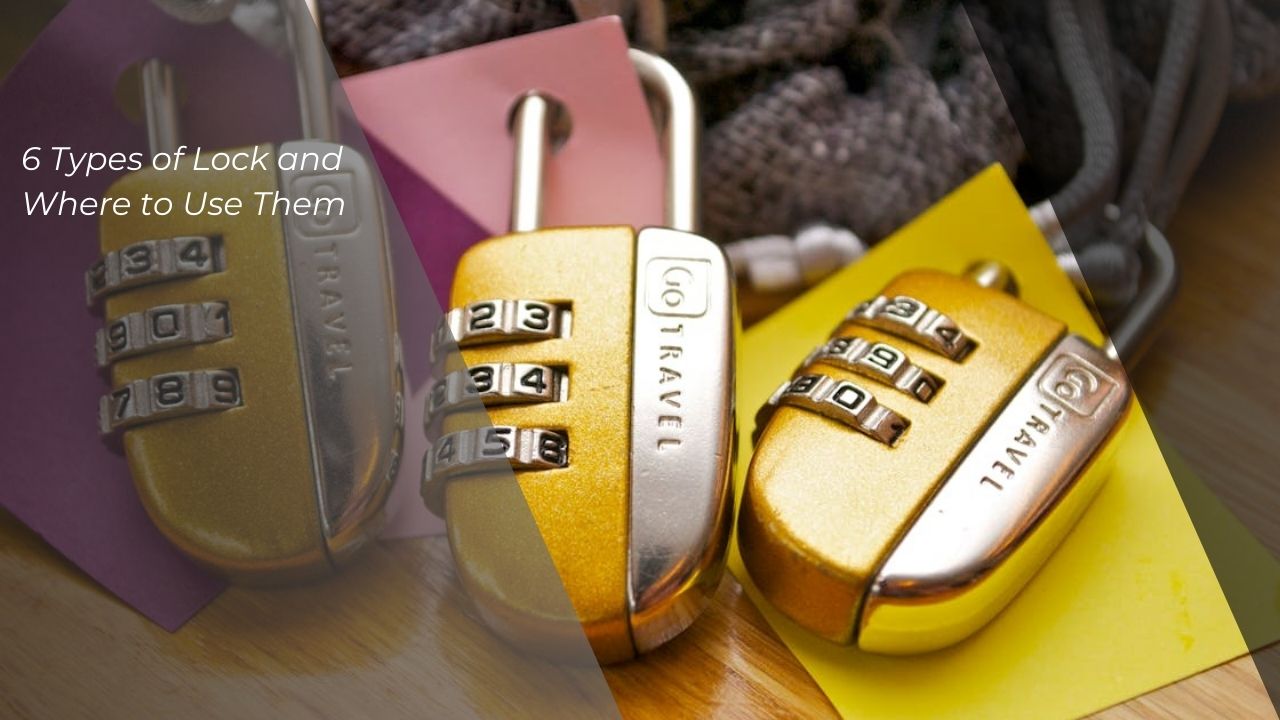
There are two main types of padlocks, a combination padlocks that use a secret code to unlock, like the ones on school lockers.
And the other one is key padlocks that require a specific key to open.
And don’t forget the TSA-approved padlocks for luggage, these special locks have a standard keyhole that TSA inspectors can use to check your bags without damaging them.
The padlocks are best for, locking sheds, lockers, luggage, tool boxes, and garage doors.
Also Read: “What is Metal Rolling?“
5. Knob Locks
Door Knob locks, those familiar locks with a button or turn in the center, are great for interior doors like bathroom doors.
They stop the knob from turning and give you some privacy. But they’re not the strongest guards.
Someone with bad intentions could break in relatively easily if this was the only lock on your front door.
So, for exterior doors, it’s best to choose a more heavy-duty lock that provides better security for your home.
Knob Locks are best for, securing indoor door locks.
6. Electronic or Keypad Locks
Electronic locks are like high-tech bodyguards for your door. They use the same locking mechanisms as traditional locks (deadbolts, knobs, etc.), but instead of fumbling with keys, you unlock them with a fancy keypad, fingerprint scanner, or even your voice!
This is perfect for homes and businesses because everyone can have their own personal code. No more hiding spare keys under the doormat or worrying about lost copies! Just remember your code (or train your voice) and you’re good to go.
The electronic locks are best for keyless security and smart home integration.
So there you go, 6 types of locks to choose for your home!
Remember, picking the right lock is like choosing the right tool for the job. Just like you wouldn’t use gardening shears to cut a steak, a cabinet lock wouldn’t hold up on your front door.
Different locks are built for different purposes, the good news is, there’s a perfect lock out there for every situation, whether it’s a simple cabinet or your entire house.
To make sure you get a top-notch lock that keeps your loved ones and belongings safe, it’s always a good idea to do a little research on different brands and features before you buy.
Also, it is crucial to choose a lock with an SNI logo on it (or its packaging), this logo is a testament that the lock is within Indonesia’s safety regulation.
This also means that the lock that you choose is already certified with SNI certification, thus, its quality and safeness has already been tested.