

The Difference Between Concentric And Eccentric Reducers – in pipe fitting, one important aspect to consider is to select the type of reducer, which functions to change the diameter of the pipe and adjust the fluid flow.
The two main variants of the reducer that are often the focus of the comparison are the concentric and eccentric reducers.
These two types of reducers offer different approaches in dealing with the change in pipe size, and a deep understanding of the difference between the two is key in designing an efficient welding system.
Also Read


In this article, we will explore the six differences between concentric and eccentric reducers, giving you a comprehensive view for you to choose the option that best suits the specific needs of the construction project. Check below for more information!
Table of Contents
What is the Difference Between Concentric and Eccentric Reducers?

The difference between concentric and eccentric reducers covers a number of key aspects that affect performance and application in pipe systems.
1. Design
The most striking difference between concentric and eccentric reducers lies in the geometric design of both.
Concentric reducers have a design where both ends are parallel, creating a uniform change in diameter.
On the contrary, eccentric reducers have an eccentric design, with one end placed higher or lower than the other.
2. Fluid Flows
Another significant difference is in the direction of fluid flow. The concentric reducer creates a change in the size of the pipe that is centralized, keeping the flow of fluids consistent and uniform.
Meanwhile, the eccentric reducer directs fluid flows to one side of the tube, minimizing the risk of solid or liquid accumulation at the bottom of the pipes.
3. Pressure and Turbulence
Concentric reducers minimize pressure and turbulence in the piping system by flatten the change in diameter.
On the other hand, eccentric reduces help minimize the pressure and turbulence with a more gradual design, giving special advantage in situations where pressure control is crucial.
4. Material Separation
Eccentric reducers are often used in situations where material separation becomes a priority. The eccentric design helps prevent the accumulation of solid or liquid underneath the pipe, keeping fluid flow smooth.
Meanwhile, concentric reducers have a uniform and centralized diameter changes, which may be less effective in minimizing the risk of material separations.
5. Complexity and Installation
The difference between concentric and eccentric reducers is complexity and installation.
Concentric reductors tend to have a simpler design, facilitating the installation process in a plumbing system.
6. Usage
Concentric reducers are generally chosen for applications that require a consistent fluid flow, such as in the chemical industry.
Meanwhile, eccentric reducers are often adopted in situations where material separation or pressure reduction is a top priority, like in the waste processing industry.
Also Read: “7 Types of Plumbing Pipes“
What are Concentric and Eccentric Reducers?

In the piping world, concentric and eccentric reducers are two kinds of key components that play a vital role in adjusting the pipe diameter to optimize fluid flow.
Here’s the explanation between the two, so you don’t choose wrong:
1. Concentric
A concentric reducer is an important component in a piping system designed to reduce the diameter of a pipe uniformly.
A design that keeps both ends aligned, a concentric reducer creates a centralized and uniform size change.
Its main function is to provide a smooth transition between two different pipe diameters, allowing fluid to flow through the system with minimal obstacles.
One of the main advantages of a concentric reducer lies in its ability to reduce pressure and turbulence in fluid flow.
Through its diameter change indicator, this component helps to create a consistent and efficient flow, making it an ideal choice for a variety of applications, including in the chemical, oil, and gas industries.
2. Eccentric
The eccentric reducer, as its name suggests, is an eccentric reducer that offers an eccentric design that creates a more gradual change in the diameter of the pipe.
One end is placed higher or lower than the other end, this type of reducer directs fluid flow to one side of the pipes.
This uniqueness brings significant benefits, especially in addressing potential problems such as solid or liquid accumulation at the bottom of the pipe.
Moreover, the eccentric reducer’s advantage lies in its ability to minimize pressure and turbulence in the piping system.
Also Read: “7 Types of Plumbing Pipes“
How to Properly Choose a Reducer
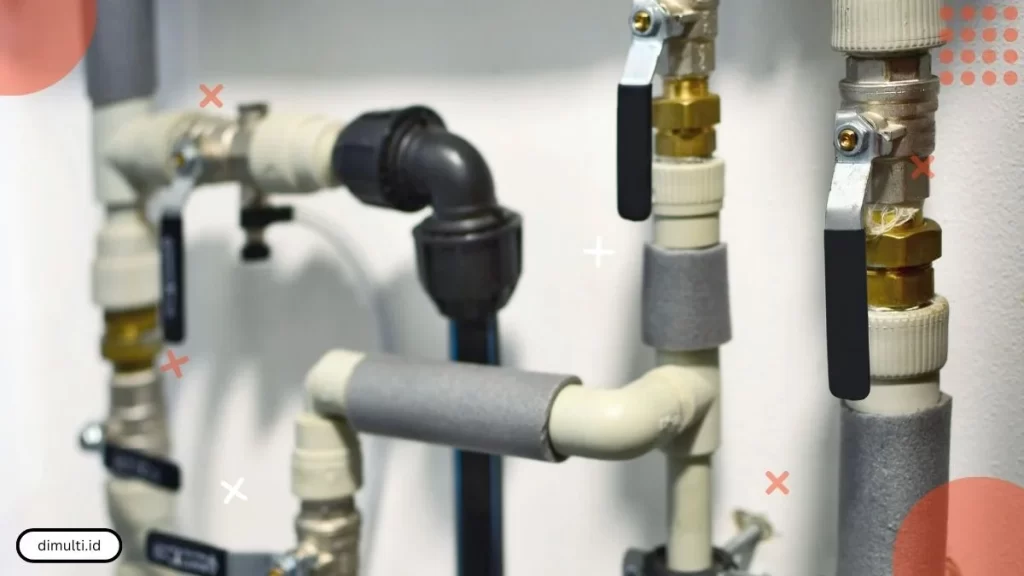
Through understanding the tips below carefully, you can choose the right reducer to ensure optimal performance and efficiency in your piping system.
1. Understanding Your Needs
Before choosing a reducer, understand well the application needs of your piping system.
Determine whether fluid flow should remain uniform, whether material separation is a priority, or whether pressure reduction is a key factor.
2. Analyze the Fluid Flows
Do an in-depth analysis of the fluid flow properties in your fluid system. If a stable flow is required, a concentric reducer may be a better choice.
On the contrary, if material separation or pressure reduction is a top priority, an eccentric reducer may be the better solution.
3. Consider Environmental Condition
Consider the environmental conditions in which the piping system will be operated. Factors such as temperature, pressure, and type of fluid transported will affect the performance of the reducer. Be sure to choose a reducer that is resistant to specific operating conditions.
4. Plan the Installation Properly
Planning the installation of a reducer is also crucial. If a simple installation is a priority, a concentric reducer with a simpler design can be an easier option to implement.
On the contrary, if a pipe configuration requires eccentric adjustment, an eccentric reducer can provide the flexibility required.
5. Choose a High Quality Reducer
Pay attention to the material of the reducer and make sure it matches the requirements of the application and the operating environment.
Choose a high-quality reducer that is resistant to the corrosion, pressure, and temperature that may be found in your welding system.
So there you have it, the difference between concentric and eccentric reducers.
It is important to know that a reducer is one of the products that needs to be certified by the SNI certification before being sold and marketed in Indonesia.
The SNI certificate is a type of product approval given to almost every product and service sold and distributed in the Indonesian market.
You can check the list of the products that are mandatory to be certified by the SNI certification,HERE.
The product that is about to be certified by the SNI certification must undergo a rigorous set of tests to ensure its safety and quality.
Not only this will give a peace of mind for the Indonesian customers knowing that the products they bought have guaranteed to be safe, the SNI certification is also beneficial for business owners alike.
The presence of the SNI logo on your products will boost the trust of the Indonesian market for your products, thus will increase your business revenue.
For more information, kindly check the information below!
- Address: Jl. H. M. Tohir Jl. Margonda No.15, Pondok Cina, Kecamatan Beji, Kota Depok, Jawa Barat 16424 (Google Maps)
- Phone Number: (021) 27843242
- E-Mail: info[at]narmadi[dot]com