
Run flat tire has become a recent technology that makes it possible for us to keep riding our car although there’s a puncture to our car’s tire.
Run flat tire (RFT) is a tire technology that has been developed since the 1980s. However, at that time this technology was not very widely used due to the limitations of the supporting technology. For now, RFT tires are widely used for luxury cars.
Using RFT tires provides its own advantages and disadvantages for your vehicle.
Also Read


The most prominent advantage of RFT tires is that they work like tires in general and still contain air with the appropriate pressure.
But when in a flat tire situation because of, for example, a puncture, the driver can continue the journey for tens of kilometers, only to remain underinflated.
So, let’s get going and get to know about this magnificent technology that changes our perception of tires in general!
What is a Run Flat Tire?
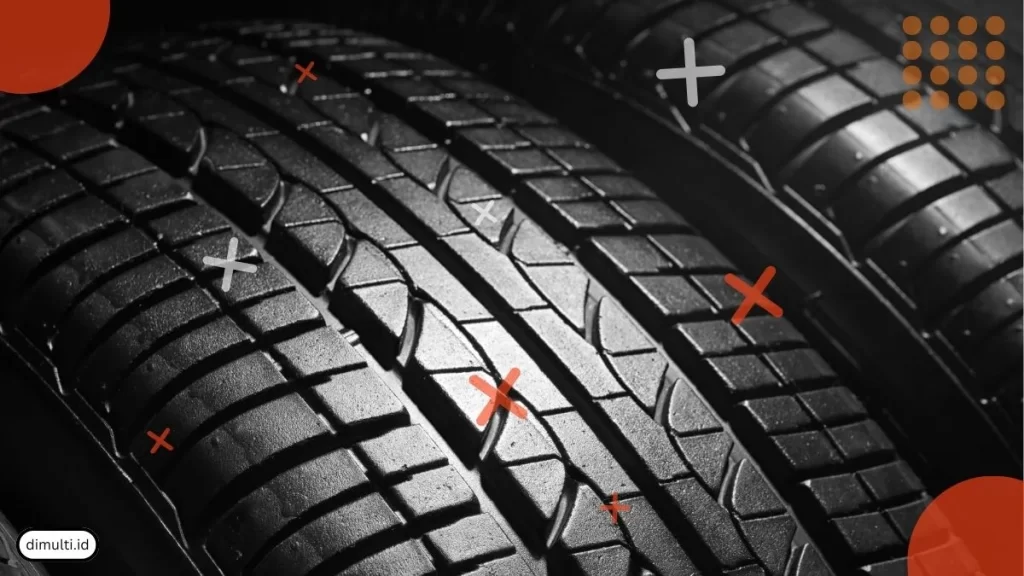
A run flat tire is a type of tire designed to allow a vehicle to continue running despite a puncture or loss of air pressure.
This technology allows the driver to keep control of the vehicle and continue traveling up to a certain distance and at a limited speed, usually enough to reach a repair shop or a safe place to change the tire.
Features of Run Flat Tire
- Reinforced Sidewalls: Run flat tires have thicker and stronger sidewalls, which are able to support the weight of the vehicle even when air pressure is lost.
- Support Ring System: Using a support ring mounted on the wheel and inside the tire to hold the weight of the vehicle when the tire is flat. So the car can still drive even though the tire is flat because there is a support ring inside the tire.
- Tire Pressure Monitoring System (TPMS): Vehicles using run flat tires are usually equipped with a TPMS that alerts you when the tire pressure decreases, so they can take appropriate action without waiting until the tire is completely flat.
- Special Design: These tires are designed to minimize deformation when air pressure is lost, while still providing better stability and control than regular tires under the same conditions.
Main Advantage of RFT
- Improving Safety: Run Flat Tires are designed to maintain form and function even without air pressure, allowing the driver to keep safe control of the vehicle. This is especially important in emergency situations where regular tires would soon go flat and result in the risk of an accident.
- Reduced Emergency Tire Replacement: Using run flat tires, you do not need to change tires immediately at the scene, which can be dangerous or inconvenient. This provides the flexibility to reach a safer place or repair shop for repairs.
- No Need for a Spare Tire: Due to the ability of run flat tires to remain functional after losing pressure, many car manufacturers no longer provide spare tires, which saves space and weight in the vehicle.
- Maintains Vehicle Performance: Run Flat Tires are designed to maintain the vehicle’s performance within a certain limit despite a puncture. This allows the driver to continue traveling at the recommended speed up to a certain distance, usually around 80-100 km.
- Reduced Reliance on Emergency Services: You don’t need to immediately call for road assistance or towing services, which can be time-consuming and costly, as they can reach the repair shop by themselves.
Also Read: “Car Tire Alignment: What Is That? What Is It For?“
Disadvantages of RFT
Having many advantages to keep working in an emergency, it does not rule out the possibility that this tire has disadvantages that you can feel directly.
Be it in terms of comfort, price or the type of car that can use the RFT tires.
- Limited Distance and Speed: When a leak occurs, a run flat tire can usually be used up to a distance of about 80-100 km at a maximum speed of 80 km/h, depending on the manufacturer’s specifications.
- Cost: Run flat tires are generally more expensive than conventional tires, both in terms of purchase price and maintenance and replacement costs.
- Driving Comfort: Due to the stiffer sidewalls, run flat tires can provide a harder driving experience than regular tires.
- Compatibility: Not all vehicles are designed to use a run flat tire. Vehicles must be equipped with a tire pressure monitoring system (TPMS) to notify the driver when tire pressure decreases.
So there you have it! The explanation about run flat tire and everything revolving around it, just for you!
Either it is the RFT or any other kind of tire, having a high quality tire, and wheels for your ride is also an important thing to consider.
And one of the key indicators of the high-quality tire and/or wheel in Indonesia especially is the presence of the SNI logo on it and/or its packaging.
The SNI logo on your tire or wheels indicates that your tire or wheel has already undergone a rigorous set of tests to ensure the quality and safety of them.
The SNI itself stands for Standar Nasional Indonesia (Indonesian National Standard) that regulates most of the products and or services in Indonesia to ensure a safe environment for consumers.
The regulations about wheels and tires is clearly stated in:
- SNI 0098-2012: For passenger car tires
- SNI 0099-2012: For truck and bus tires
- SNI 0100-2012: For light truck tires
- SNI 0101-2012: For motorcycle tires