

Electric Vehicle Battery Types – Did you know that electric vehicles (EVs) have different types of batteries?
Electric vehicles are gaining popularity as a vehicle option that is not only reliable, but also environmentally friendly.
The existence of electric vehicles not only helps our daily accommodation, but has developed into a prestigious item that can reflect a person’s social status.
Also Read

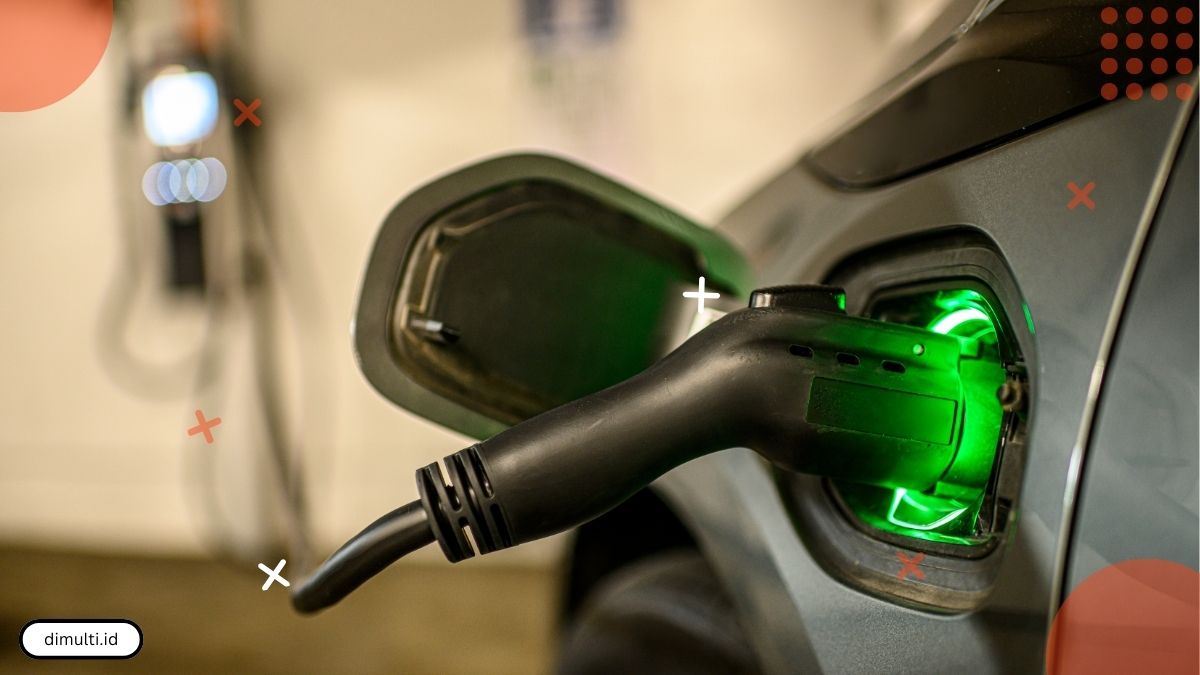
Electric vehicles are usually operated by an electric motor that is powered by a chargeable battery, and because of this, there are several types of electric vehicle batteries available in the market.
So, do you know the electric vehicle battery types? Let’s take a look at the full explanation that we have summarized especially for you, only at dimulti.id!
Electric Vehicle Battery Types
1. Lithium-ion (Li-ion)
Lithium-ion batteries are currently widely used in portable electronics such as cell phones and laptops.
The reason is because it has high energy and volume relative to other electrical energy storage systems.
For this reason too, many electric car manufacturers use Li-Ion batteries to power their vehicles.
There are several types of Li-Ion batteries that are widely used in electric vehicles, including:
- LFP – Lithium Iron Phosphate (LiFePO4)
- NCA – Lithium Nickel Cobalt Aluminum Oxide (LiNiCoAlO2)
- LTO – Lithium Titanate (Li2TiO3)
- LMO – Lithium Manganese Oxide (LiMn2O4)
- LCO – Lithium Cobalt Oxide (LiCoO2)
This type of battery uses lithium as one of its key components. Li-ion batteries also have a high power-to-weight ratio, high energy efficiency, good performance at high temperatures, and long life.
Li-ion batteries are also made up of various components. These internal components help shape the features and characteristics of the li-ion, these are cathode, anode, electrolyte, and a separator.
2. Nickel-metal Hydride (NiMH)
The next one is the Nickel-metal Hydride (NiMH). These batteries are usually found in computer equipment or medical equipment.
NiMH batteries use hydrogen as the energy storage medium. Nickel and other metals (such as titanium) are added to control the flow of hydrogen ions.
NiMH EV batteries are more commonly used in hybrid electric vehicles (HEVs).
This type of battery can’t be recharged with an external power source, so the recharging process of these batteries depends on wheel movement, engine speed, and regenerative braking.
Nickel-metal hydride batteries have a much longer lifespan than other batteries. Also, its components are safe and easier to recycle as they contain few environmentally toxic materials.
However, the main challenge is that nickel-metal hydride batteries have a high cost. In addition, it also has a high sagging rate, generates high temperatures.
These drawbacks make NiMH less effective as a battery for electric cars that require external charging sources such as the Plug-in Hybrid Electric Vehicle (PHEV) or All-Electric Vehicles (AEV).
Therefore, this type of battery is more commonly found inHybrid Electric Vehicle (HEV).
Also read: SNI Certification for batteries in Indonesia
3. Lead-acid (SLA)
There are also electric cars that rely on lead-acid batteries (SLA). Lead-acid batteries for electric cars belong to the category of rechargeable batteries that have existed for a long time.
If you look at it in terms of its shape and size, SLA batteries are less likely to compete with other batteries in terms of its capacity, but they usually have a lighter weight than other batteries.
However, when it comes to price, this type of battery is definitely more pocket-friendly.
Lead-acid batteries are high-power, economical, safe, recyclable and reliable. However, their low capacity, poor performance at low temperatures, and short lifespan hinder their use.
However, high-power lead-acid batteries are currently being developed.
Also Read: “7 Types of Car Batteries“
4. Ultracapacitor
Unlike batteries that involve chemical reactions, ultracapacitors release energy through the movement of ions within the electrolyte and the redistribution of charges across the double layer.
This enables ultracapacitors to deliver high power outputs and rapid charge and discharge cycles.
Although ultracapacitors have low energy density, these batteries have very high power density. This means that this type of EV battery can deliver a high amount of power in a short period of time.
Ultracapacitors can also provide additional power to the vehicle when accelerating and climbing hills.
5. Solid-State
Solid-state batteries do not use liquid electrolytes as in lithium-ion batteries. Instead, they use solid electrolytes such as glass, ceramic or other materials.
The main advantage of this type of battery is that, since it does not use liquid materials, there is no risk of leakage, which reduces the risk of fire and offers an overall safer option.
Because of this, solid state batteries are predicted to be a cheaper, lighter and faster charging option.
In addition, these batteries are predicted to have a driving range of up to 500 miles which will eliminate the “range anxiety” that EV drivers usually experience.
However, this type of battery is still under development by BMW, and will only be marketed in 2025-2030.
So there you have itt! The 5 electric vehicle battery types!