

What is the difference between a French Door fridge and Side by Side Door fridge? Let’s put it to work and explore the difference between these two fridge styles!
The fridge is a family hub, and choosing the right one can feel overwhelming.
But fret no more! This guide will break down the key differences between side-by-side and French door refrigerators.


We’ll explore features, configurations, and benefits of each to help you find the perfect fridge for your busy household.
What Are French and Side-by-Side Door Refrigerators?

1. French Door
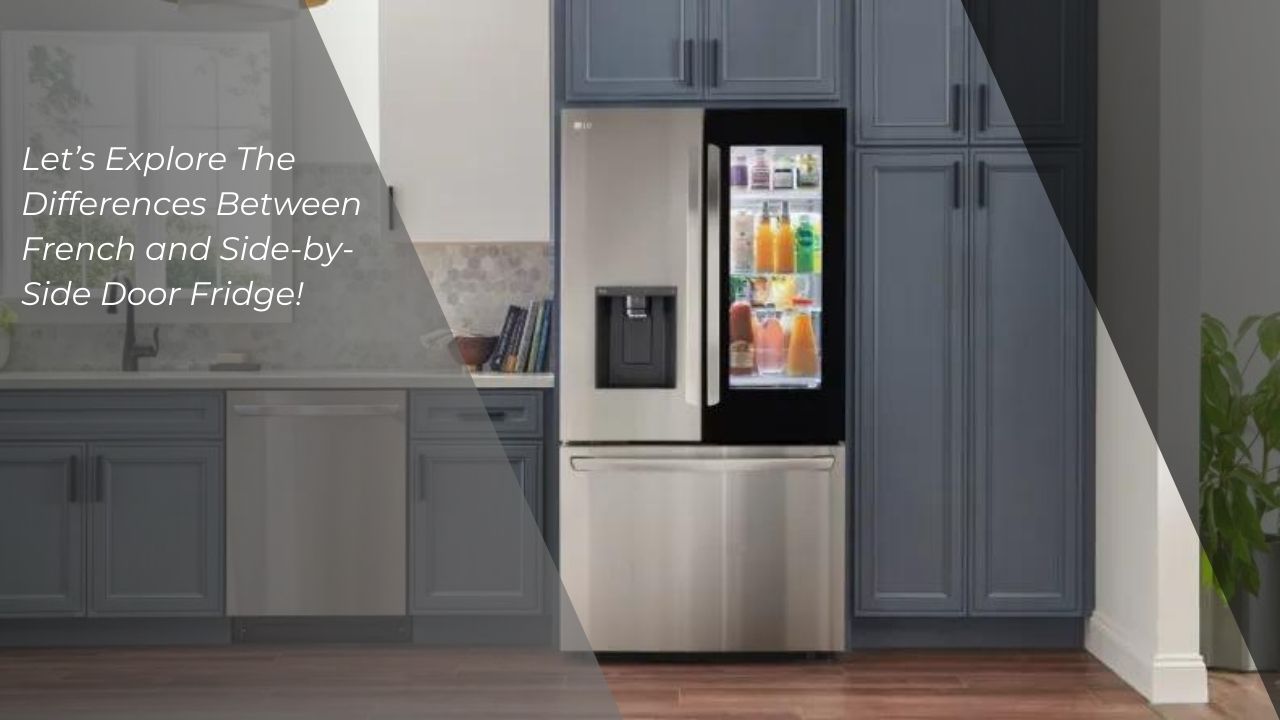
French door fridges come in different sizes, but they all share a signature look. They feature a spacious top compartment with two doors that swing open in the middle.
These doors can be opened independently or together, giving you easy access to all your groceries. Below the double doors, you’ll find a roomy pull-out drawer freezer.
The french door style offers an advantages, such as:
- Spacious shelves: Store platters and serving trays with ease thanks to the wide, full-width layout.
- Customizable: The large interior allows for more creative storage solutions to fit your needs.
- Easy access: As the fresh food is at the eye level, it means less digging and less food waste.
- Room for more: The larger fridge capacity lets you store more fresh food compared to side-by-side models.
- Energy-saving access: The French door design keeps cold air in better because you only need to open one door at a time.
But, the french door have also a few disadvantages, such as:
- Hard to organize the freezer: The pull-out drawer freezer can limit shelving and bins, making it trickier to organize frozen food.
- Limited freezer space: If you love stocking up on frozen meals or have a big family, the smaller freezer compartment might be a concern.
- More expensive: While there are budget-friendly options, French door fridges tend to be slightly more expensive than side-by-side models.
- Less door space: If you rely on door bins for condiments and drinks, you might find yourself sacrificing valuable shelf space in the main compartment.
Also Read: “Exploring The 6 Types of Refrigerator“
2. Side-by-Side Door
Side-by-side fridges feature two tall, thin compartments, one for the fridge and one for the freezer that run from top to bottom.
This design maximizes vertical space and can even include fancy built-in features like dispensers for ice and water right on the door.
The pros of side-by-side door including:
- Spacious freezer: The spacious freezer compartment with multiple shelves makes organizing and storing frozen food a breeze. Plus, more space means you can fit more!
- Visibility: With both the fridge and freezer sections running vertically, you can easily see everything you need at eye level, reducing wasted time searching.
- Doorway to convenience: Tall door bins offer ample space for condiments, drinks, and other frequently used items, keeping them within easy reach.
- Budget-friendly option: You might find side-by-side fridges offer similar features and capacity as French door models, but at a more affordable price point.
- Perfect for compact kitchens: The two narrow doors take up less space when open, making them ideal for kitchens with limited space.
The cons of side-by-side door:
- Less fridge visibility: The tall design might make it harder to see everything in the back of the fridge. You might find yourself digging for items that get pushed to the back.
- Less fridge, more freezer: The focus on freezer space means you might have less room for fresh groceries.
- Tight squeeze: Storing large platters or wide containers can be tricky due to the narrower shelves.
Difference Between French Door and Side-by-Side Fridge
Also Read: “History of Refrigerator“
1. Size
Fridge dimensions depend on the type and how much it can hold. There are standard sizes for each kind, though French door models tend to be a bit bigger than side-by-side ones.
Both types come in freestanding or built-in options, and you can find standard depth or counter-depth models to fit your kitchen layout.
2. Capacity
While French door fridges boast a roomy design, side-by-side models often offer similar overall space. Typically, both types range from 20 to 28 cubic feet.
French door fridges dedicate most of this space to the fresh food section, while side-by-side models split the capacity more evenly between the freezer and fridge compartments.
3. Configuration

Side-by-side refrigerators come in a familiar design with two tall doors, one for the fridge and one for the freezer.
French door refrigerators, on the other hand, offer more variety. While the classic style features two swinging doors for the fridge on top and a freezer drawer below, some French door models might surprise you with an extra drawer or even four doors.
Regardless of the number of doors, both French door and side-by-side refrigerators allow you to adjust shelves and bins for flexible storage.
However, French door fridges often take advantage of their wider interiors to provide even more customizable storage options.
4. Price
While both French door and side-by-side refrigerators can vary in price depending on features and size, side-by-side models generally start at a lower price point.
This is because even base models of French door fridges often come with more features and capacity than their side-by-side counterparts, driving the price up.
5. Features
While both French door and side-by-side models offer conveniences compared to other fridge types, French door models tend to reign supreme in terms of features, especially when it comes to performance.
Think in-door ice and water dispensers, adjustable shelves for flexible storage, crisper drawers that keep your produce fresher for longer with humidity controls, rapid cooling technology, and a variety of other features depending on the specific model you choose.