

Components of Fire Alarm – It turns out that in an alarm-based fire protection system, there are several important components to ensure the running of the system!
What are the components of the fire alarm? Let’s find the explanation that we’ve carefully summarized just for you!
Components of Fire Alarm
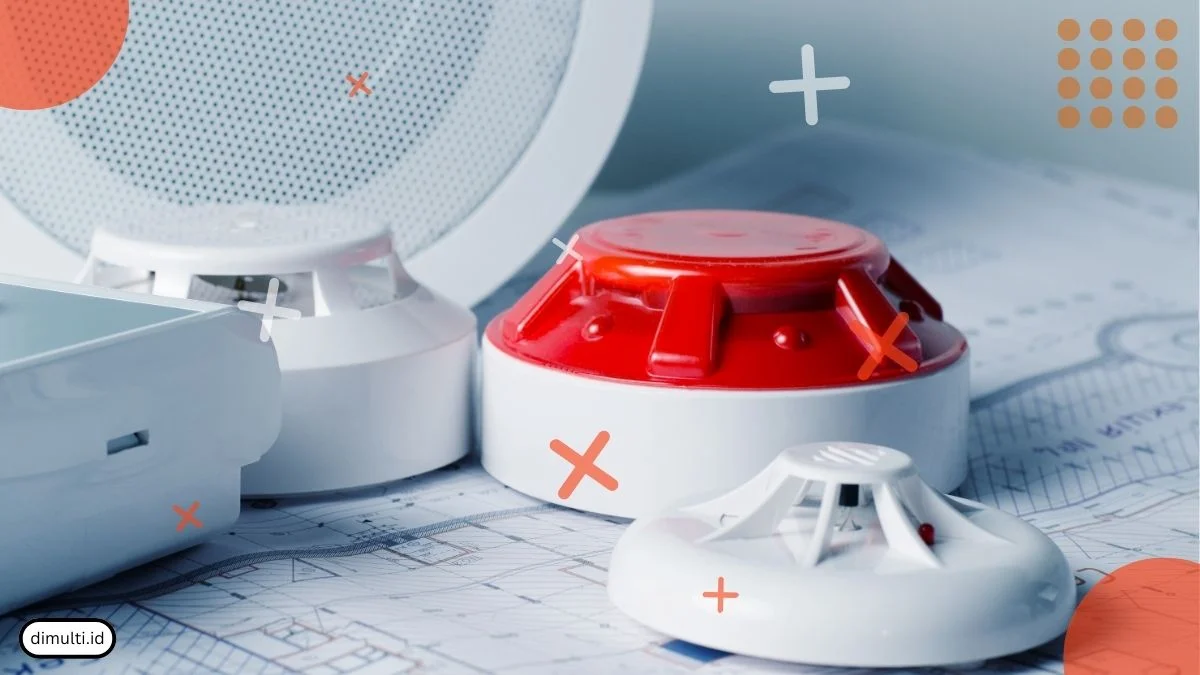
Fire alarm systems are at the forefront of protecting lives and property from fire hazards, consisting of several components that work to detect and give early warning of a fire.


Here are the 7 main components of a fire alarm system that you need to know:
Also Read: “The SNI Certification for a Fire Hydrant Installation“
1. Smoke Detectors
This fire detector functions as the eyes and ears of the fire alarm system that is highly sensitive to smoke that appears when a fire is burning.
When smoke is detected, it automatically sends a signal to the control panel, which then activates the alarm and alerts building occupants to take immediate evacuation action.
With its advanced technology, it not only increases safety, but can also reduce the damage caused by fires by providing a quick and efficient response.
2. Heat Detectors
This component of the fire alarm system is designed to identify a significant increase in temperature in a short time.
These fire detectors are usually located in rooms prone to dust or vapors that can trigger false alarms from smoke detectors.
3. Control Panel
The control panel is arguably the heart of the fire alarm system that serves to coordinate all activity on the fire alarm system.
This includes receiving information from the various detectors and deciding on a course of action, such as activating the alarm or contacting the fire department.
4. Sirens and Alarms
When a fire detection occurs, the fire alarm and siren components will sound loudly and continuously to alert building occupants.
This striking sound is designed to be clearly heard by everyone, ensuring that every individual is aware of the emergency situation and immediately takes the necessary action for their safety.
As such, the alarm system serves not only as a warning, but also as an important reminder for quick and orderly evacuation in the face of potential fire hazards.
5. Manual Pull Station
This component allows individuals to manually activate the fire alarm system when they see signs of fire, thus speeding up the response to emergencies.
With the manual trigger button in place, occupants can immediately report a fire even if the automatic detectors have not activated, providing an opportunity to warn others and reduce the risk of further damage.
Also Read: “How Many Smoke Detectors Do I Need?“
6. Automatic Extinguishers
Some fire alarm systems are equipped with automatic fire extinguishing systems that are activated when the alarm sounds, such as sprinklers, foam systems, and CO2 fire extinguishers, to immediately tackle the fire automatically.
With these components in place, the risk of fire spreading is minimized, giving occupants additional time to evacuate.
7. Backup Batteries
Finally, backup batteries and other power sources ensure the fire alarm system continues to function even when there is a power outage, maintaining continuity of protection.
So there you have it! The 7 components of a fire alarm that we’ve summarized just for you!
Having a fire alarm system sure gives us the peace of mind knowing that our whole building is protected from fire hazard.
But did you know that installation of fire alarms are strictly regulated in Indonesia?
Yup! The fire alarm installation is one of the mandatory things to be followed according to the SNI, with the SNI 03-3986-2000 as its exact regulations.
This is to ensure that every fire alarm that is installed in various buildings are up to Indonesian standards, thus improving efficiency of the fire alarm systems itself.