
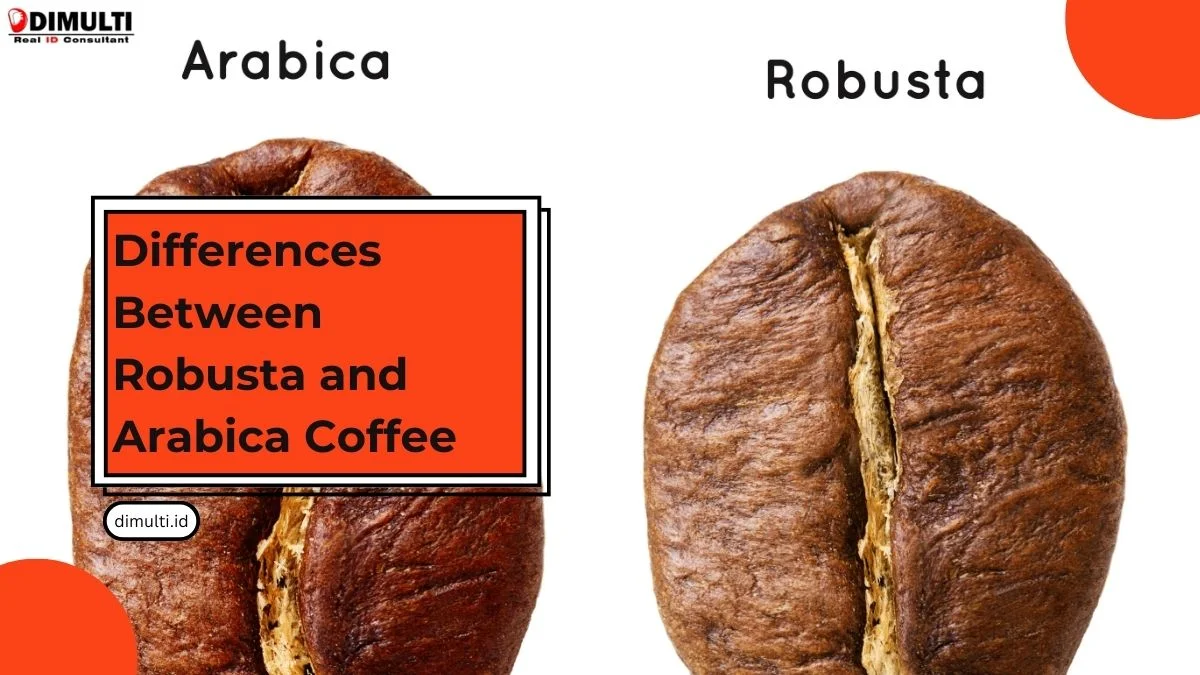
For you coffee lovers, the differences between robusta and arabica coffee is the one thing that you should know! There are few differences between those most famous types of coffee beans, from the taste, the caffeine content, up to their price.
Who doesn’t like the taste of freshly brewed coffee in the morning? Having a sip of coffee in the morning indeed will brighten up your day and make you feel more alert due to its caffeine content.
The robusta and arabica beans are the two most famous types of coffee beans that are mostly used in every part of the world.


But, you might wonder what’s the differences between robusta and arabica coffee? Let’s find the answer down here!
Differences Between Robusta and Arabica Coffee
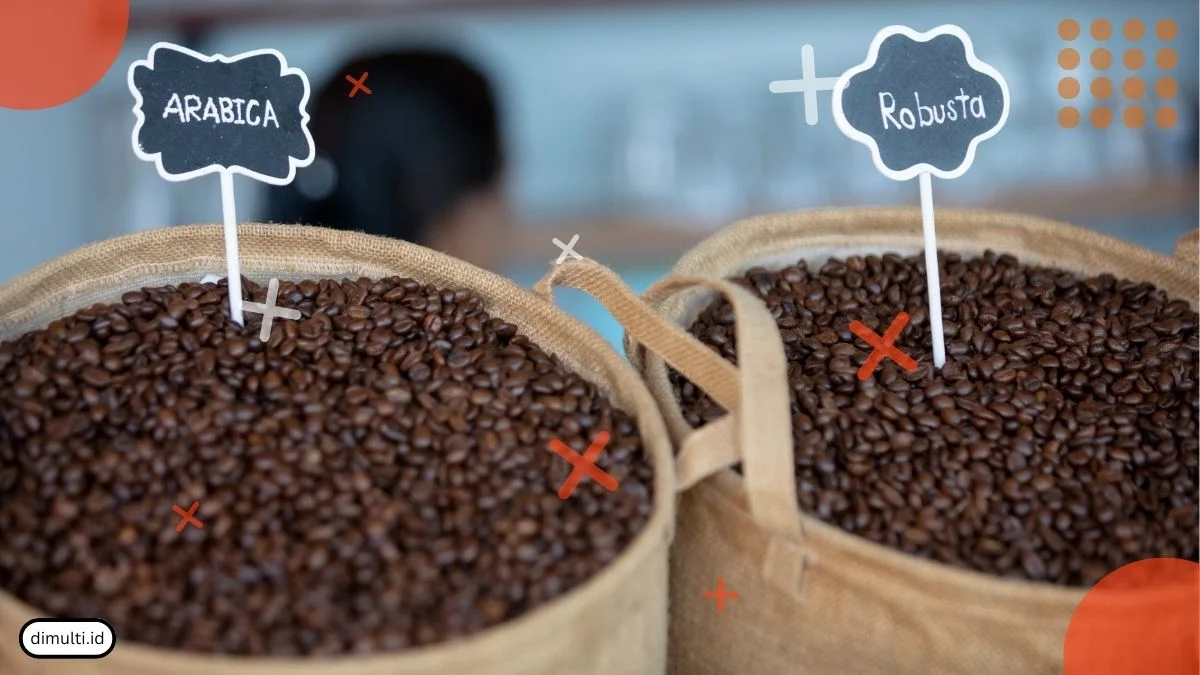
Before we dive into the difference between these two, let’s talk about the beans themselves for a while.
The robusta is the second most popular coffee bean in the world, behind the arabica beans of course, with the arabica controlling 75% of the world coffee market, with robusta accounting for the rest.
This might be because the robusta was actually only ‘discovered’ about 100 years after arabica. So, it’s only natural that arabica still dominates the world coffee market.
1. Taste
Robusta coffee has a slightly more bitter taste than Arabica. This is due to the higher caffeine content in robusta. The amount of robusta caffeine is claimed to be twice that of arabica.
In addition, the bitter taste in robusta coffee is also due to the chlorogenic acid (CGA) content of up to 7-10%, while arabica coffee is only 5.5-8%.
2. Caffeine Content
Related to the previous point, the next is the caffeine content contained in those beans. Robusta beans are generally known to wake you up in the morning due to its higher caffeine content (up to 2,7%).
But, if you like a smoother, sweeter and more pleasant flavor, choose the arabica which have less caffeine content (1,5%).
3. Lipid and Sugar Content
Arabica contains almost 60% more lipids and almost twice the concentration of sugar than robusta.
This factor may also have a big impact on why most coffee lovers prefer arabica as it doesn’t taste as bitter as robusta.
4. Shape
Robusta has generally smaller and rounder beans compared to arabica beans. The color of raw robusta beans is also slightly darker compared to arabica.
Other than that, the shape of their leaves and trees are also different, with robusta having wider leaves compared to arabica leaves. And robusta plants are taller (4,5 – 6 meters) than arabica (2,5 – 4,5 m).
Also Read: “5 Most Expensive Chocolate in the World“
5. Price
Robusta coffee trees are more resilient than Arabica. Robusta can withstand high temperatures and is even better when exposed to direct sunlight.
In addition, due to its higher caffeine and CGA content, robusta is also more resistant to pests and diseases than arabica.
Per hectare, robusta fields can also produce more coffee than arabica. These factors, plus the coffee growing period, make robusta cheaper than arabica.
6. Cultivation
About 75% of the world’s coffee production is arabica and 25% robusta. Brazil is the largest arabica producer and Vietnam is the largest robusta producer in the world.
7. Yield and Farming
In the process of tree growth, arabica can self-pollinate, while robusta must be assisted by cross-pollination.
Even so, robusta can produce fruit that can eventually turn into a coffee bean within two years. While arabica takes longer, which is about four years.
And with that, it’s a wrap! The differences between robusta and arabica coffee beans that we’ve compiled just for you!
One thing to keep in mind is that no beans are better than the other, and it eventually comes to flavor preferences and profiles that’ll vary from person to person.
There are many people who enjoy a good robusta-filled blend while others only like 100% arabica.
But, whether it’s arabica or robusta, one thing that you need to be sure of is to have high quality coffee to ensure a good and safe coffee for your consumption.
But, how do you determine the high-quality one? Well, it is easy if you stay in Indonesia, as there are several standards that regulate the quality of coffee.
The standard is called SNI which stands for Standar Nasional Indonesia (Indonesian National Standard) that regulates most, if not all, of the products sold and distributed in Indonesia.
Other than that, this standard/regulation also regulates and sets the standard of many services and/or installation methods to ensure everything is up to Indonesian standard, thus improving the overall safety of many industries.
This standard surely will give us as a consumer a peace of mind, knowing that almost everything that is sold and distributed is already tested for its quality and safety.
Other than that, the SNI certification also can be quite beneficial for business owners alike. Imagine you’re a business owner and your products have already been tested and meet certain standards like the SNI.
It surely can boost the trust of Indonesian consumers especially, to your products, and you can use it as marketing tools to further increase your products’ or business’ reach within the Indonesian market.
Not going to stop there, the SNI certification also can be mandatory for certain products, take motorcycle helmets for example.
And because it must be certified by the SNI certification, having your products certified will also be a testament that your product and business have already followed Indonesian law and regulation, thus saving you from a problem that might occur later on.
Back to the black-magic-liquid we’re talking about, the SNI for the coffee itself is clearly stated in:
- SNI 2983:2024: For instant coffee
- SNI 3542:2004: For powdered coffee
- SNI 01-2907-2008: For coffee bean