Fire Prevention at Home – How to prevent house fires? Fires are not classified as natural disasters, so they can still be prevented or minimized.
Even for forest fires that involve nature, there are various causes that can be avoided so that it does not happen. Especially with fires in the home area, there should be more ways to anticipate.
This is because 80% of the reasons for house fires are human negligence. 20% are unpredictable factors, but still preventable.
Also Read

Living space is indeed a vulnerable area because it has many causes of house fires ranging from electrical installations, the use of gas cylinders, the origin of lighting candles, throwing cigarette butts, and many more.
So, how are fire prevention at home? Come and take a look at the explanation that we’ve provided down below!
Also Read: “SNI and NFPA Standard for Fire Hydrant“
Fire Prevention at Home

Because of the many triggering factors, individuals who live at home should have enough knowledge about fire prevention measures.
Considering that fires can cause serious material and immaterial losses, it is certainly better to prepare preventive measures to prevent fires, right?
You can try practicing the following preventive measures immediately:
1. Don’t Leave the Kitchen Unattended
The first step is to make sure the kitchen is always well monitored. Especially when cooking on the stove and using electronic cooking devices.
Why is that? Of course, because the kitchen is one of the highest potential points for fire. Because, there are gas cylinders and electronic devices at once.
Gas cylinders have the potential to leak, emit sparks, and explode, resulting in a fire. Fires caused by gas cylinders are classified as class B.
While electronic devices? These objects have the potential to experience an electrical short that can cause sparks.
If exposed to a burst of leaking gas, the surrounding area will immediately burn uncontrollably.
2. Don’t Use Power Beyond Its Capacity
It is important not to use electrical power beyond the specified capacity, both for the main fuse and additional devices connected via socket outlets and roll cords.
For example, if a house has a power capacity of 1300 kWh, the use of electronic devices should not exceed this limit.
If usage exceeds the capacity, there will be a drop in power that often results in blackouts. In the long run, this can lead to short circuits that can potentially cause fires, so it is important to monitor and manage electricity usage wisely.
In addition, when using socket outlets or roll cords to distribute electricity, it is important to pay attention to the number of electronic devices connected simultaneously.
If overloading occurs due to too many devices being connected, the temperature of the socket or cable roll can increase dramatically. This increase in temperature can trigger short circuits and short circuits, which are common causes of fires.
3. Don’t Smoke near Flammable Objects
An easy but often overlooked way to prevent house fires. Cigarettes are often considered trivial, especially the used butts, so they are thrown away carelessly.
It is assumed that the remaining sparks will not be able to cause a fire. In fact, if there are flammable objects such as wood, plastic, paper, and electronic cables nearby, a fire will quickly ignite.
Not only the sparks, but smoke from cigarettes can increase the temperature of the surrounding air.
If there are items that are conductors nearby, a fire can start on its own. So, try to smoke in an open area and out of reach of other objects.
4. Keep Children Away from Things that are Prone to Fire
This one factor is also often underestimated because many assume that children will not be able to cause a fire to occur.
In fact, when children are close to flammable objects, all possibilities are wide open.For example, a gas stove that is easily ignited.
Especially if children are used to watching adult activities when cooking in the kitchen. The stove can explode if there is a gas leak or the child pours or throws flammable objects on it.
Also Read: “NFPA Fire Classification“
5. Make sure Electronic Equipment is Unplugged or Turned Off Before Traveling for Long Periods
If you are traveling for a long time (more than 2 days), make sure to unplug all electronic devices from the wall socket.
First, to prevent excessive power consumption due to the worry of accidentally leaving the electronic equipment on.
Another reason is, of course, to avoid electrical short circuits occurring due to short-circuiting of the devices.
Eventually a short-circuit occurs which can damage the device or even cause sparks that can lead to fire.
If necessary, when traveling for long periods of time, it is best to turn off the main switch.
6. Check Electrical Equipment or Installations Periodically
Don’t forget to conduct regular checks and maintenance on electrical installations and electronic devices at home.
This is a very effective way to prevent house fires to avoid class C fires caused by electrical networks.
You must check fuses, sockets, and electronic equipment that consumes a lot of power.
Make sure that all electrical installations use SNI-labeled products so that they are guaranteed according to standards regarding quality and durability.
Routine inspections ensure that there are no disconnected cables, worn or loose bodies and anomalies in the distribution of electricity that trigger fires.
7. Installing Fire Alarms or Fire Extinguishers
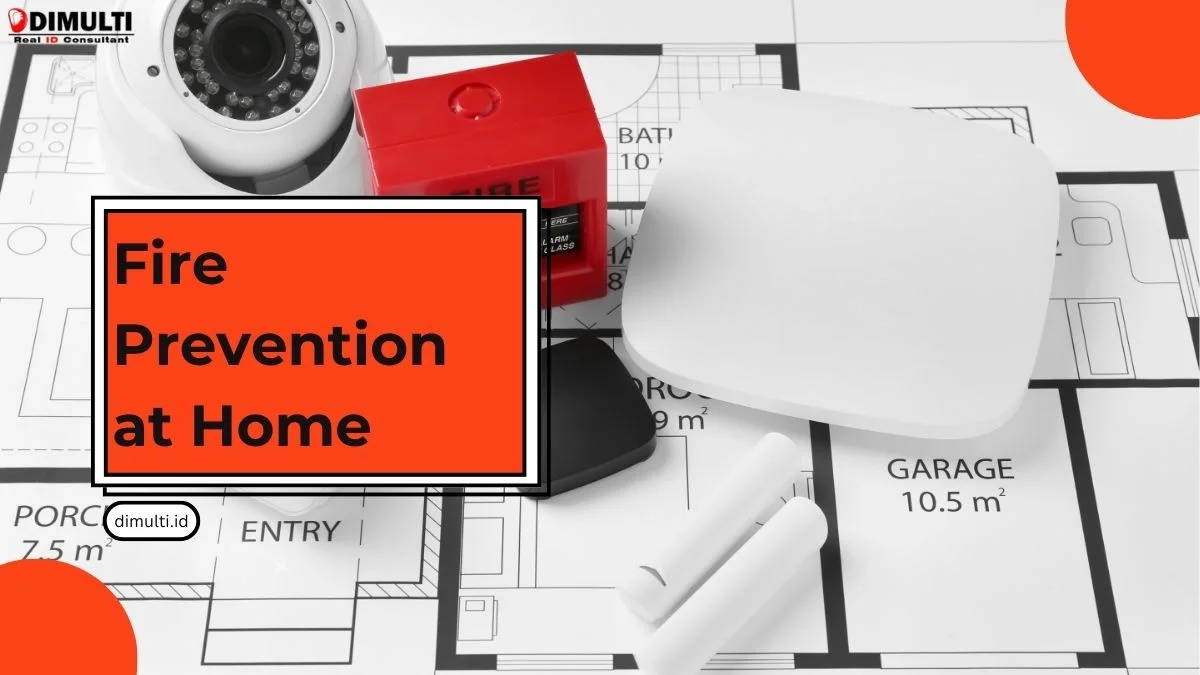
Smoke alarms can also be an effective prevention method. This lightweight item, which can be installed anywhere in the house, will help detect the signs of a fire as quickly as possible through smoke sensors.
When smoke starts to appear, the device’s detection sensor will pick it up and start the system automatically.
It will then give an audio-visual warning signal to people nearby to immediately extinguish the source of the fire or self-evacuate. Warnings can include loud sounds and strobe lights for the hearing impaired.
Other than that, having a fire extinguisher in your house can also be one of the preventive measurements that you can take to prevent a further loss in an event of fire.
Also Read: “Gas Fire Extinguishing Agents: What Are Those?“
So there you have it! The fire prevention at home that you can take to ensure the safety of you and your beloved family!