
SNI certification for car jacks in Indonesia? What is it? In today’s article we will give you a thorough information about the SNI 09-2665-1992 for car jacks in Indonesia!
Car jacks have become very important equipment especially for maintaining a car whether it’s in the car workshop or for personal use.
But did you know that the car jack must have a certification to ensure the safety and quality standards of the car jack itself?
Also Read


In Indonesia, the certification for car jacks is clearly stated in the SNI 09-2665-1992. So, without further ado, let’s discuss the SNI certification for car jacks in Indonesia only at dimulti.id!
SNI Certification for Car Jacks in Indonesia
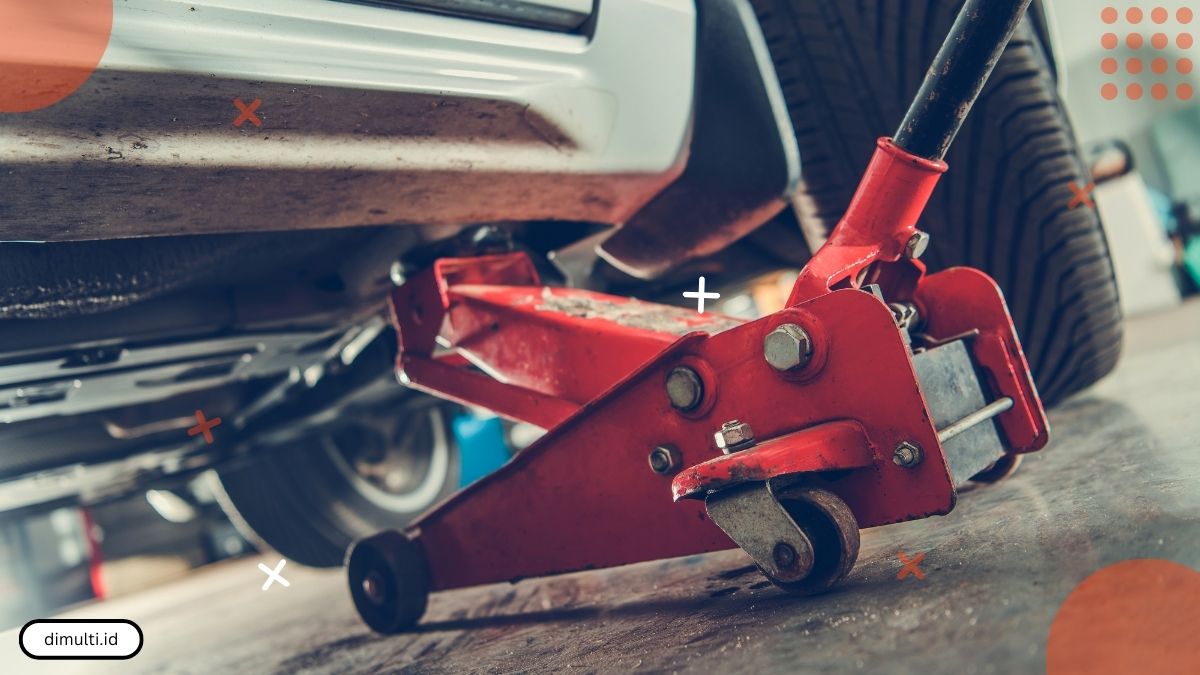
SNI 09-2665-1992 is an Indonesian National Standard (SNI) that outlines the technical requirements for jacks used on motor vehicles with a maximum lifting capacity of 2,000 kilograms. This standard aims to ensure the safety and quality of jacks used in Indonesia.
The standard itself covers technical requirements, testing methods and labeling requirements for motor vehicle jacks with a maximum lifting capacity of 2,000 kilograms.
Let’s take a look at different key points of this certification down below!
1. Technical Requirements
The car jacks that about to be certified with the SNI certification must meet the following technical requirements:
- Lifting capacity: The jack must be able to safely lift a load of up to 2.000 kilograms. This will ensure the strength and reliability of the jacks.
- Stability: Because the jack is a crucial piece of equipment, a stable construction of the jack is a must to prevent it tipping over during use and harm its user.
- Safety: The jack must be equipped with safety features, such as an automatic lock to prevent sudden load drop.
- Materials: A strong and corrosion resistant material is a must to be used for the car jacks to ensure its quality and safety aspect.
- Dimension and weight: There are a specific dimension and weight to be applied for the car jacks, this for easy use and storage.
Also Read: “5 Types of Car Jacks“
2. Testing Methods
The SNI 09-2665-1992 also sets a rigorous testing procedures to ensure the safety and reliability of car jacks.
These tests are designed to determine various aspects of the jack’s performance, including its lifting capacity, stability, durability, and safety features.
Here are a few key testing methods for the car jacks according to SNI 09-2665-1992:
- Lifting Capacity Test: A jack is subjected to a load that gradually increases until it reaches the specified maximum lifting capacity. This test also determines the jack’s structural integrity and performance and checks if there’s any signs of deformation, instability, or leakage (in the case of hydraulic jacks).
- Stability Test: The jack is placed on a level surface and given horizontal and vertical forces to simulate real-world condition, after that the jack’s resistance to tipping over and also its ability to maintain a stable position under load are further evaluated. There are other factors to be considered when undergoing this test such as jack placement, ground conditions, and wind loads.
- Durability Test: The jack undergoes repeated lifting and lowering cycles to assess its resistance to wear and tear, this test will simulate prolonged use and helps identify potential weak points in the jack’s construction. After these tests are conducted, the jack’s performance will be re-evaluated.
- Safety Feature Test: The effectiveness of safety features in the car jacks such as emergency lowering mechanism and anti-slip pads are thoroughly evaluated to determine its effectiveness in preventing accidents. This test usually involves a simulation of emergency situations.
- Material Testing: The materials used in the jack’s construction are subjected to tests to evaluate their strength, durability, and resistance to corrosion.
3. Labeling Requirements
SNI 09-2665-1992 mandates specific labeling requirements for car jacks to ensure consumers have essential information about the product. Clear and accurate labeling is crucial for safe and effective use.
These are the essential information that must be included on the label:
- Manufacturer’s Name and Address: Clearly identifies the producer of the jack.
- Model Number or Identification Mark: A unique identifier for the specific jack model.
- Lifting Capacity: The maximum weight the jack can safely lift.
- SNI Certification Mark: Indicates compliance with the SNI 09-2665-1992 standard.
- Safety Warnings: Prominent warnings about potential hazards, such as avoiding overloading, using the jack on a level surface, and not getting under a vehicle supported solely by the jack.
- Operating Instructions: Basic guidelines for using the jack safely.
- Maintenance Instructions: Information on how to care for the jack to maintain its performance.
So there you have it, the explanation of SNI 09-2665-1992, the SNI Certification for Car Jacks in Indonesia!