
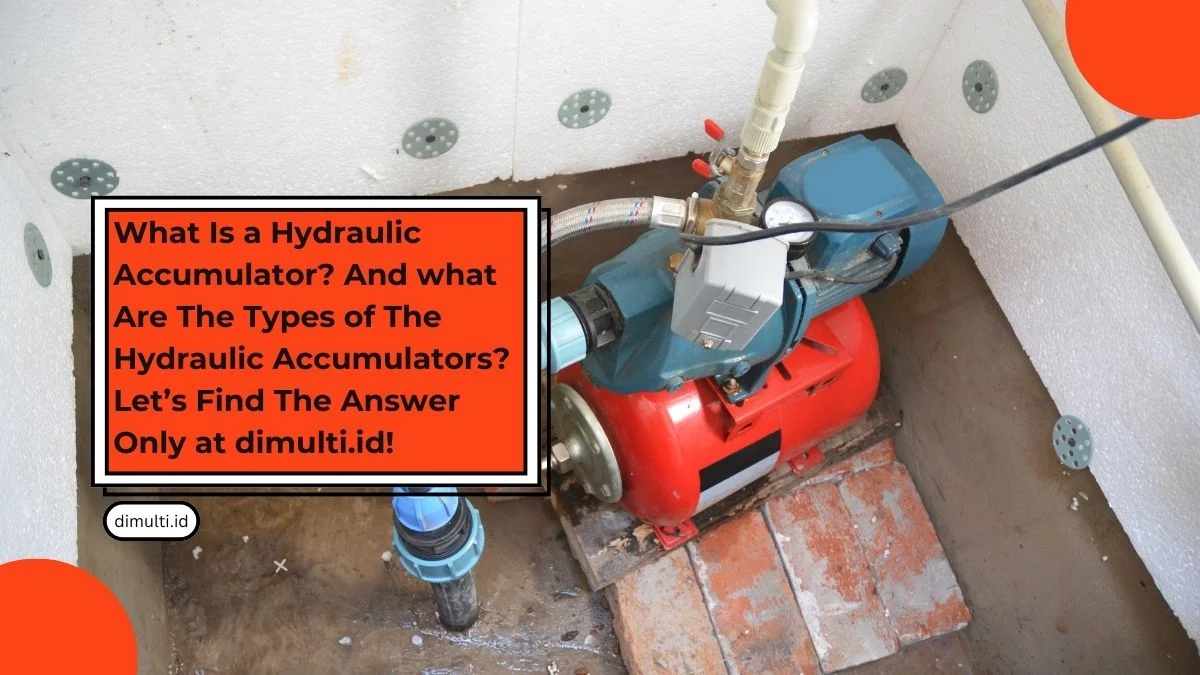
What is a hydraulic accumulator? On a hydraulic system the accumulator is a very important component of a hydraulic system.
The accumulator serves as an energy storage reservoir for hydraulic fluids that cannot be compressed using an external system.
So, what is a hydraulic accumulator? What are its functions? And what are the types of the hydraulic accumulators? Let’s find the answer only at dimulti.id!
Also Read


Table of Contents
What is a Hydraulic Accumulator?

The hydraulic accumulator is a device used in a hydraulic system to store the potential energy in the hydraulic system.
The reserved energy is stored in the form of a compressed gas or spring or by a raised weight to be used to exert a force against a relatively incompressible fluid or the pressure storage reservoir in which a non-compressible hydraulic fluid is under pressure by an external force.
In other word, the hydraulic accumulators operate by making use of the considerable difference in compressibility between a gas and fluid.
The hydraulic accumulator can provide several functions, such as:
- Energy Storage
- Absorbing Pulsation
- Cushion
- Maintaining Pressure
Also Read: “What is a Hydraulic Filter? What is It Use For?“
Types of Hydraulic Accumulators
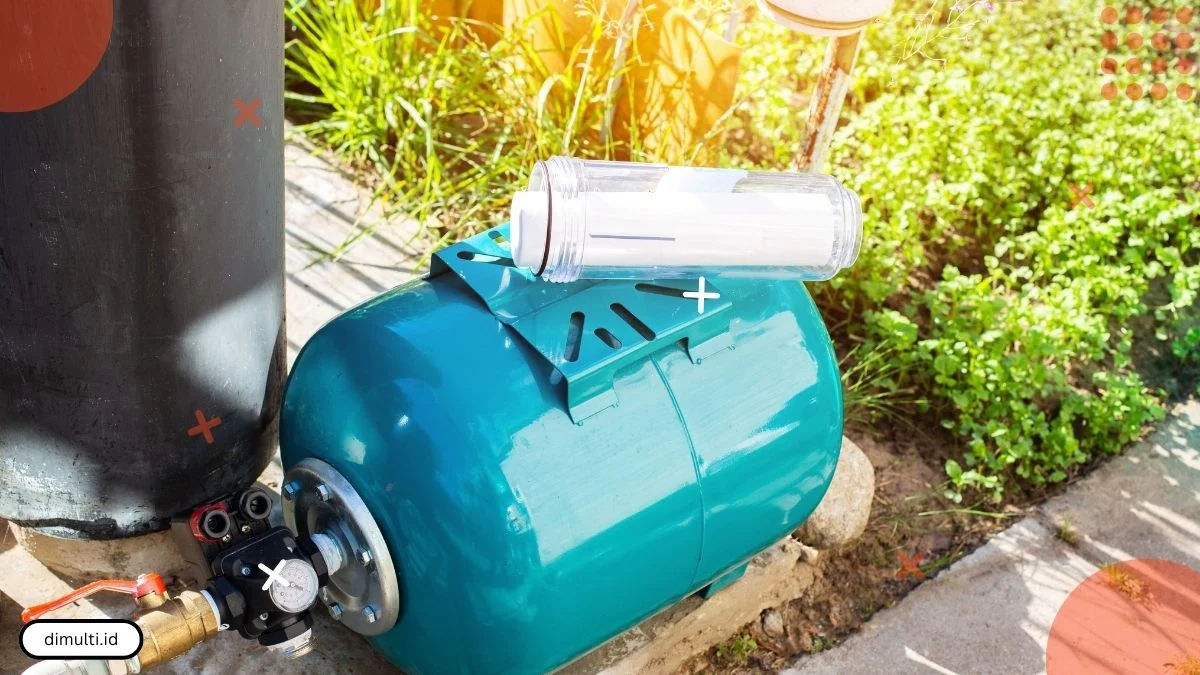
1. Bladder Accumulator
The bladder accumulator is the most commonly used accumulator. The bladder is filled with nitrogen and fitted in a welded or forged steel pressure vessel.
The bladder is made of an elastic material such as rubber and the gas pre-charge the pressure can be adapted via the gas inlet/outlet valve on top of bladder accumulator.
The bladder accumulator is usually used when a high power output is required and is capable of operating at maximum pressures of up to 1.000 bars.
These are the pros and cons of using bladder accumulators:
- Pros: High Efficiency
- Cons: Nitrogen will permeate the foam bladder material over time and need to be periodically recharged.
2. Direct-Contact Gas Filled Accumulator
The next one is the direct contact gas filled accumulator.
This types of accumulator is usually used in a very large installation where it would be very expensive to use either a piston or bladder accumulator.
The direct-contact gas filled accumulator consists of a fully enclosed cylinder, mounted in a vertical position and containing a liquid.
3. Diaphragm Accumulator
These accumulators have a rubber plate or diaphragm as the separating element.
The diaphragm accumulator is constructed in two halves that are either screwed or bolted together with a synthetic rubber installed between both halves making two chambers.
4. Piston Accumulator
As its name implies this accumulator consists of a cylinder assembly, a piston assembly and two end cap assemblies.
The piston accumulator contains a piston with liquid on one side, and a pre charged air or nitrogen on the other side.
5. Metal Bellow Accumulator
Metal bellow accumulator, which is similar to the bladder accumulator, is used in a variety of industries to store the energy of liquid or gas.
6. Spring Accumulator
The spring accumulator uses the energy stored in spring to create a constant force on the liquid contained in an adjacent ram assembly.
Also Read: “What is a Hydraulic Valve?“
So there you have it, the explanation of what is hydraulic accumulator in hydraulic systems!
One thing that is worth noting is that the hydraulic system is one thing that needs to be certified by the SNI certification.
The SNI certification itself is a type of product approval that applies to almost every product and service sold and provided in Indonesia.
The product that is about to be issued by the SNI certification has to undergo a rigorous set of tests to determine its safety and whether or not the product is within the Indonesian standards.
To have your product certified by the SNI certification is so important and has a lot of benefits, as the product that has been certified and has an SNI logo on it will boost the trust from the Indonesian market for the said products.