
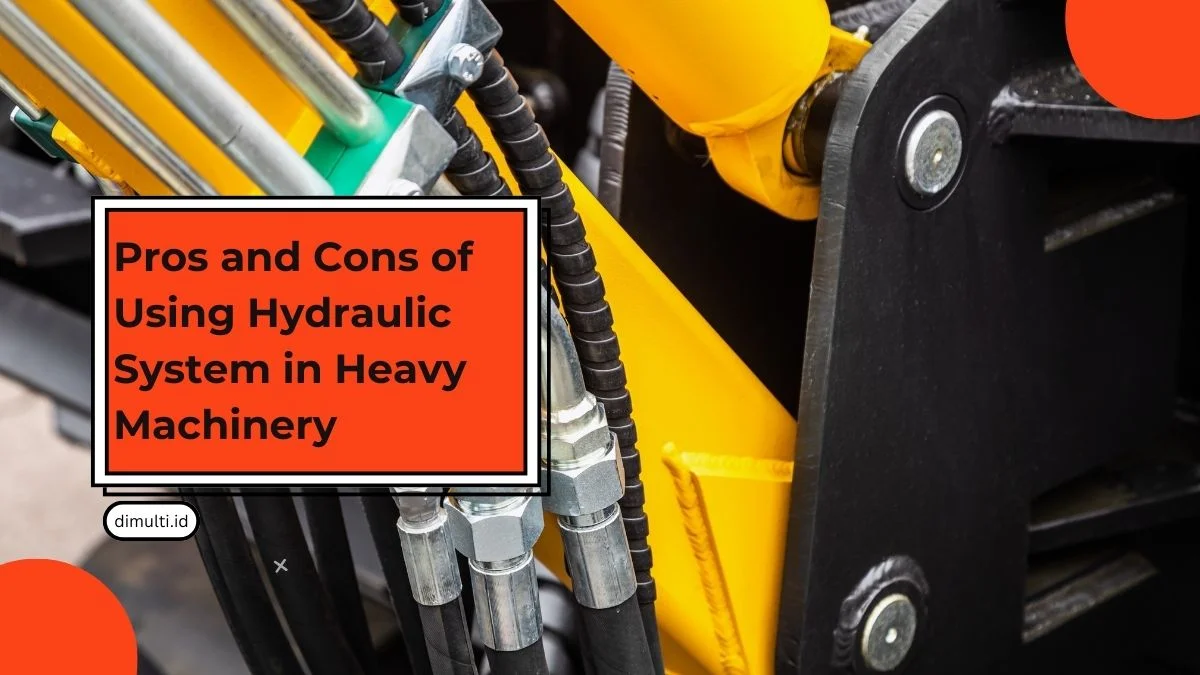
Pros and Cons of Using Hydraulic System in Heavy Machinery – You may have seen heavy equipment like an excavator, crane, forklift, or bulldozer working by lifting or moving heavy loads easily.
Have you ever thought about how such tools can do such a heavy job so efficiently? The answer is the hydraulic system!
In order to be well understood, you will be invited to learn about the pros and cons of hydraulic system only at dimulti.id!
Also Read

Of course by understanding the pros and cons of using hydraulic system, you’re expected to be able to make a decision when you going to use a hydraulic system in your business.
Ready? Let’s get into it!
Pros of Using Hydraulic Systems
1. Huge Power for a Compact Size
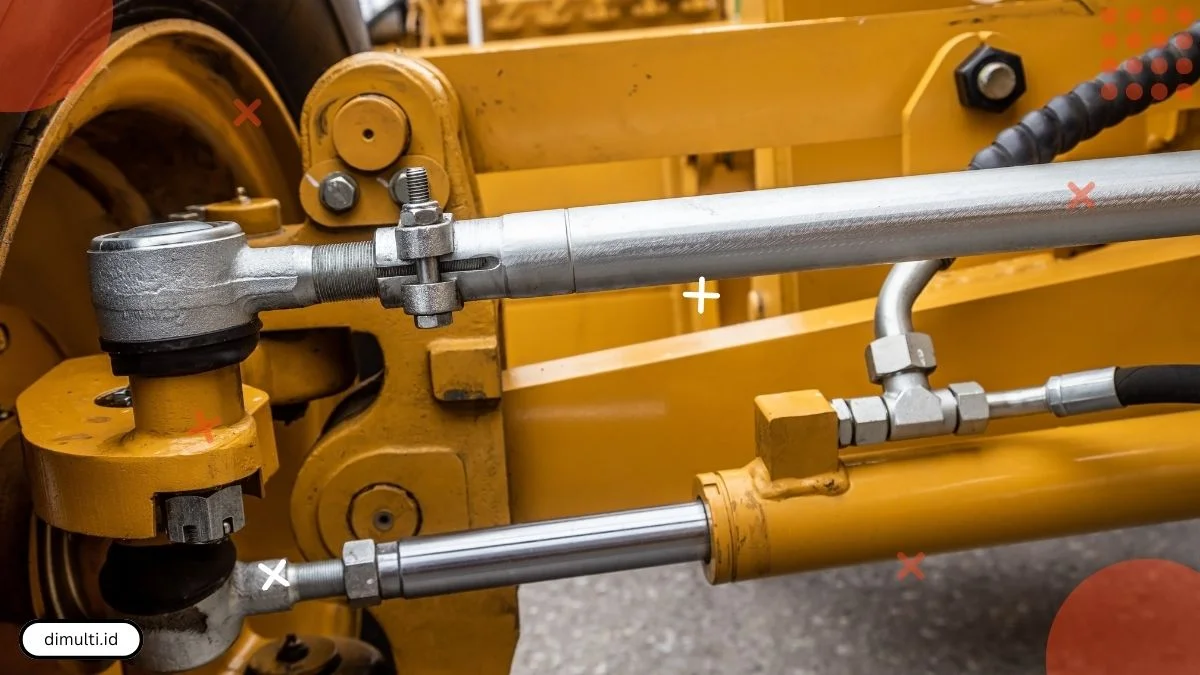
The hydraulic system’s ability to generate large power in relatively compact sizes makes it widely used in a variety of fields.
Hydraulic pumps work by applying pressure to fluids that will flow through the entire hydraulic system.
The design of the hydraulic systems makes the fluid’s pressure consistently pass through all parts of the system, including the hydraulic cylinders that act as the energy transfer medium.
As a result, a device or machine that uses a hydraulic system can generate large power in smaller and lighter sizes than a mechanical or electrical system.
This allows heavy equipment or other industrial machines to perform heavy work efficiently.
2. Its Ability to Lift and Move Heavy Loads
The ability to lift and move heavy loads easily is another advantage of the hydraulic systems.
Heavy-duty vehicles such as excavators and forklifts use hydraulics to lift as well as move very heavy loads.
This is because the hydraulic pressure in the cylinder allows for accurate lifting and lowering of the load, thus reducing the risk of damage in the process.
The existence of hydraulics clearly makes work that requires great strength and accuracy can be executed more safely.
3. Precision
Hydraulic systems have high precision in moving devices and components. The application of accurately measured hydraulic pressure allows for accurate control of the machinery.
This precision plays an important role in a variety of applications, especially in manufacturing and production processes that require precise positions or movements.
For example, in milling machines, hydraulic systems ensure that the workpiece is positioned correctly and the processing movements are done accurately.
So in the end the production is more consistently and high quality.
4. Fast
The operating speed of the hydraulic system can be easily adjusted as required. This speed control can be done manually or automatically, depending on the control device used.
The ability to regulate this speed allows the hydraulic system to be adapted to a variety of tasks and needs.
For example, on heavy equipment such as excavators, the operator can control so the movement speed of the arm can be adjusted to cope with a variety of working conditions.
In addition to the production machinery, the process speed can be adjusted to suit the production needs and can improve the overall efficiency of the process.
Also Read: “10 Components of Hydraulic Cylinder“
Cons of Hydraulic System
1. Energy Inefficiency
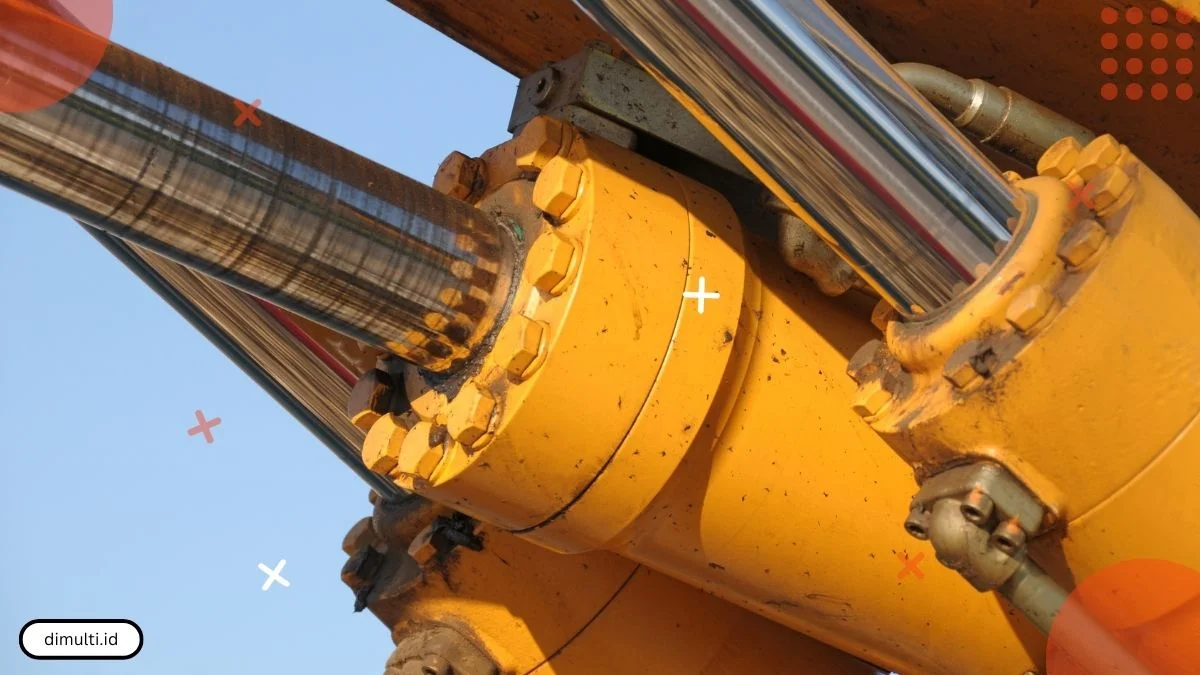
One of the major disadvantages of a hydraulic system lies in the energy inefficiency.
When hydraulics flow through the system, there will be friction between the fluid and the surface in the hydraulic component.
But, the amount of the loss of the energy really depends on the quality of the components, the maintenance, and the hydraulic system as a whose.
In some cases, these energy losses can result in higher energy consumption compared to using mechanical or electrical systems.
2. Maintenance that Requires Special Skills
The maintenance of a hydraulic system requires special skills and knowledge of the components and how they work.
Every component in the hydraulics system must be kept clean, any leakage should be checked periodically, and the pressure and temperature of the fluid should always be monitored.
If not treated properly, the hydraulic system can experience problems such as leaks, unwanted pressure changes, or even permanent damage to the components.
Routine and proper maintenance will ensure that the hydraulic system works properly thus improving its lifespan.
3. Environmental Impact
The uses of hydraulic oil in the system can impact the environment negatively especially when there is a leak or improper disposal of the oil.
Hydraulic oil that is leaked from the hydraulic system can contaminate the water and land, thus polluting the environment that can be harmful for our ecosystem and human health.
To prevent this, properly dispose of the used oil and also implement proper waste management.
4. Cost and Availability
Hydraulic fluids are an important component of a hydraulic system. Availability of a good quality hydraulics oil is essential to ensuring the performance and reliability of the system.
And on top of that, replacing and purchasing high-quality hydraulic fluids can also be a significant cost, especially in large hydraulic systems.
Also Read: “What Are the Types of Hydraulic Cylinders?“
There you have it, the pros and cons of using hydraulic system!
Take it as a friendly reminder, the hydraulic system is one of the many products that needs to be certified by the SNI certification before being marketed and sold in the Indonesian market.
What is an SNI certification? Well, to put it simply the SNI certification is a type of product approval to ensure the safety and quality of any product and to determine whether the product is already within Indonesian standards.
The SNI certification covers almost every industry ranging from construction, medical, to agricultural industries.
Before the SNI certificate is given or issued to a certain product, the respective product needs to undergo a rigorous set of tests to ensure any aspect according to the regulation.