

What are the types of saws that are commonly used in many industries? The saw is a staple tool that has been used in crafting or construction industries.
The saw is a tool that functions to cut materials, but did you know there are several types of saws to be used for a certain application?
Yes, there’s no single type of saw that fits all the cutting needs because each type may have its own function and better to do one task than the other.


Therefore, in this article, we will give you the explanation of types of saws and their functions in detail, so that you have a deeper understanding. Let’s take a look at the details below!
Table of Contents
Types of Saw
1. Hacksaw
The first one on our list of types of saws is the hacksaw or also known as the iron saw, like its name suggests, the hacksaw is better for cutting iron or metal materials.
You can spot the iron saw by its distinctive appearance that consists of a blade that is attached to a metal frame.
While the hacksaw is known for its ability to cut metal material, its applications are broader than that as the hacksaw also able to cut other material such as plastics or woods,
Hacksaw has become a staple choice in construction projects, furniture manufacturing, and other craft activities. The advantage of a hacksaw lies in its ability to cut material quickly and accurately.
2. Handsaw
Handsaws are also a commonly used type of saw that even most people have them in their household toolbox.
This tool is mainly used to cut wood, plastic, or other material that is quite thick. The ability to cut the thick material is supported by a narrow gap between the saw teeth so it can easily cut the material.
In order to use a handsaw effectively, it is important to pay attention to a few things.
First, make sure the saw is always sharp to cut smoothly, you can maintain it by sharpening the teeth regularly.
Next, hold the saw tightly and steadily, with the hand not too close to the area to be cut.
Move the saw forward and backward with consistent movements and pressure, to ensure a clean cutting result.
3. Nokogiri / Japanese Saw
The Japanese saw, also known as the nokogiri, is a traditional type of saw originating in Japan.
This saw is equipped with a design that consists of a thin sharp saw tooth that is carefully sharpened on its both sides.
One of the advantages of the nokogiri is the quality of the saw. Thin knives allow precise cutting with little loss of wood fiber.
Carefully carved teeth on a nokogiri also allow for smooth cutting, resulting in a cleaner wood surface.
4. Chainsaw
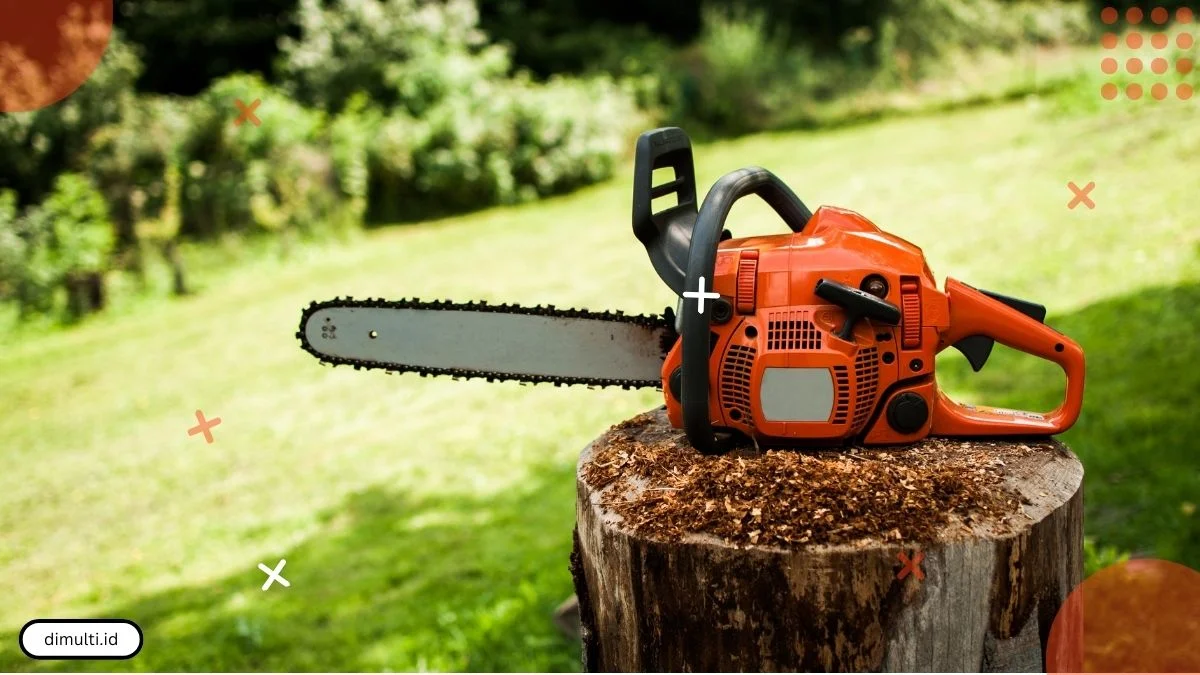
In the carpentry industry, the chainsaw has become an irreplaceable tool. Its ability to cut wood quickly and accurately makes it an ideal choice in cutting, building, or even gardening work.
Whereas, in the forestry industry, the chain saw is used for cutting of large trees with high efficiency.
A chainsaw has a rotating sharp chain-shaped teeth that can rotate in high-speed to cut the wood smoothly and easily.
The chain bearings are also equipped with an automatic lubrication mechanism to maintain the saw performance and extend the life of the tool.
However, due to its great strength, chainsaw require special attention to safety when used. You should wear self-protection such as protective helmets, gloves, and ear protectors to protect yourself from the risks that may arise during the cutting.
5. Scroll Saw
Scroll saw, a tool commonly used in wood crafts, is a type of saw used to cut thin materials with fine details and depths.
The main advantage of the scroll saw is its ability to make a cut with curves and complicated details.
The tool is equipped with a thin, straight vertical saw that moves up and down quickly. This movement allows you to control the tool with high precision when cutting the material.
In using scroll saw, it is important to pay attention to several factors.
Make sure the knives are in good condition and sharp enough to cut well. In addition, the speed of the tool must be adjusted to the material to be cut. Harder materials require lower speeds, while softer materials can be cut at higher speeds.
6. Keyhole Saw
Generally, keyhole saw is used on workpieces that have small angles or to cut the middle part of a wooden board by creating a gap in the middle of it.
In addition, it is also useful in home repairs, especially when doing cuts on wall panels for access to hidden pipes or cables.
The thin knife design and smaller ends on the keyhole saw allow the user to make accurate cuts and details on the material. The knife also has a tooth with a narrow gap, allowing smooth cutting and neat edges.
The capability of the keyhole saw in making cut with curves or circles allows users to create attractive and unique designs.
Also Read: “7 Types of Handsaws For Your Next DIY Project!“
8. Jigsaw
The next one on our list of types of saws is the jigsaw!
Not to be confused with a fictional horror character of the same name, the jigsaw is a type of saw that comes with a long, thin knife that moves forward and up quickly much like the scroll saw.
This movement allows the user to control the cutting with precision or follow a previously marked pattern.
The main advantage of the jigsaw is its ability to perform precise cuts with various shapes and angles.
This tool is very useful in crafting projects, modeling, or even electrical installation. In wood crafts, jigsaw allows users to create complicated pieces, such as decorations on furniture.
9. Miter Saw
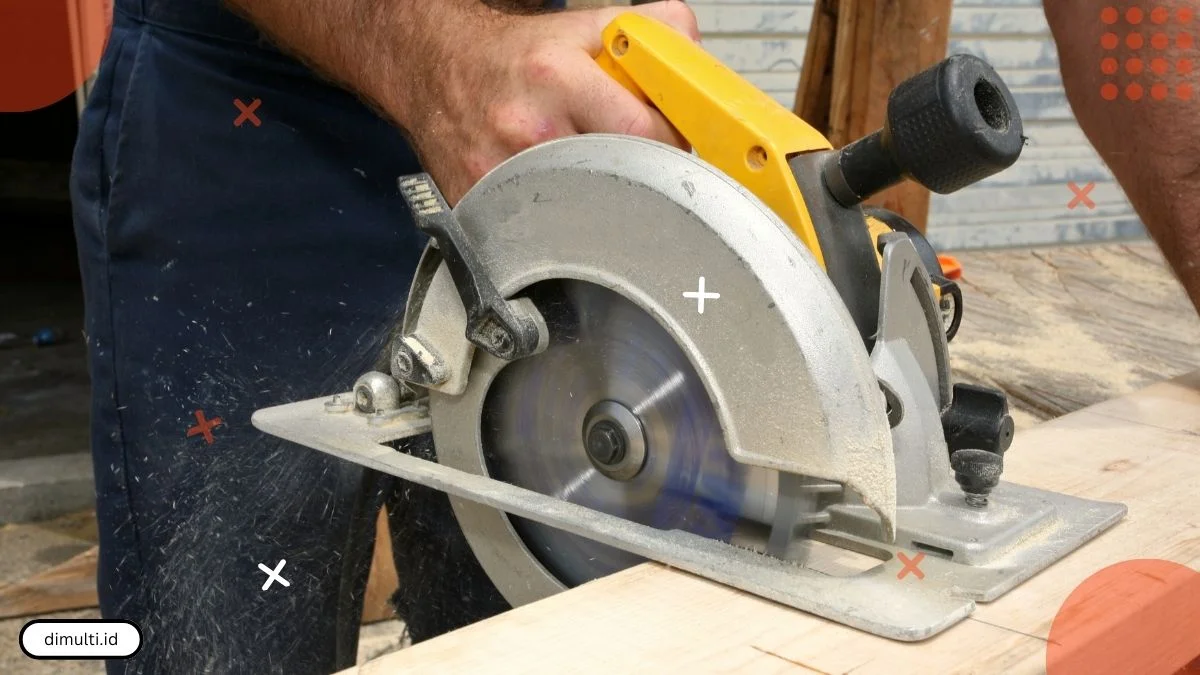
Miter saws are a type of cutting tool that is used for cutting with an angled or sided position.
This type of saw is known to have unique capabilities that allow cutting material in an angle with high precision.
One of the main advantages of the miter saw is its ability to bend up to a 45-degree angle, both to the left and right.
Before using it, make sure the saw is in good condition and sharp enough to cut well. Carefully adjust the desired cut angle and make sure the angle lock is well locked before cutting.
In addition, pay attention to the position of the material to be cut and make sure it is steadily tightened to avoid slips that may affect the cutting result.
10. Crosscut Saw
In construction sites, the crosscut saw becomes a popular choice in cutting wooden beams, boards, or panels with high precision.
Its accurate capabilities allow it for accurate cutting and produce solid and tight connections.
By the way, the teeth on the knives are specially designed to cut wood with little fiber damage thus producing a neat cut surface.
So, with that being said, this tool is very useful in various projects, such as construction, interior finishing, or furniture making.
11. Veneer Saw
The veneer saw is generally used in the veneer installation process, where this tool allows precise cutting and smooth edges on the sheet of veneer.
Equipped with a thin knife, this saw minimizes the risk of damage or rupture of the thin wooden layer when cutting is conducted.
The primary function of the veneer saw is to cut the veneer with a consistent thickness, so that it produces a thin layer sheet that is perfect for use on surfaces of various wooden products.
Because a consistent veneer density is important in achieving an aesthetic and professional end result on furniture, doors, or other wooden panels.
12. Flooring Saw
In the floor installation process, flooring saw becomes a very useful tool that allows for an accurate cutting on the floor board, both for adjusting the angle and shape of the room.
In addition, the flooring saw also used in floor repairs to helps to cut damaged or uneven floor boards, thus allowing for appropriate replacement.
Basically, the flooring saw is made to cut floor materials with high precision. This tool is reliable in the process of floor installation or floor repair, providing a high precision and accurate cutting.
So there you have it! The types of saws alongside its function and uses!
The saw, especially the electric saw, is a dangerous tool if used without caution.
With that being said, the electric saw that is sold and distributed in Indonesia must undergo several tests to meet the Indonesian standard of quality and safety.
The regulation is clearly stated in SNI IEC 60745-2-11:2016 and SNI IEC 60745-2-5:2014 about SNI certification for electric saw in Indonesia.