
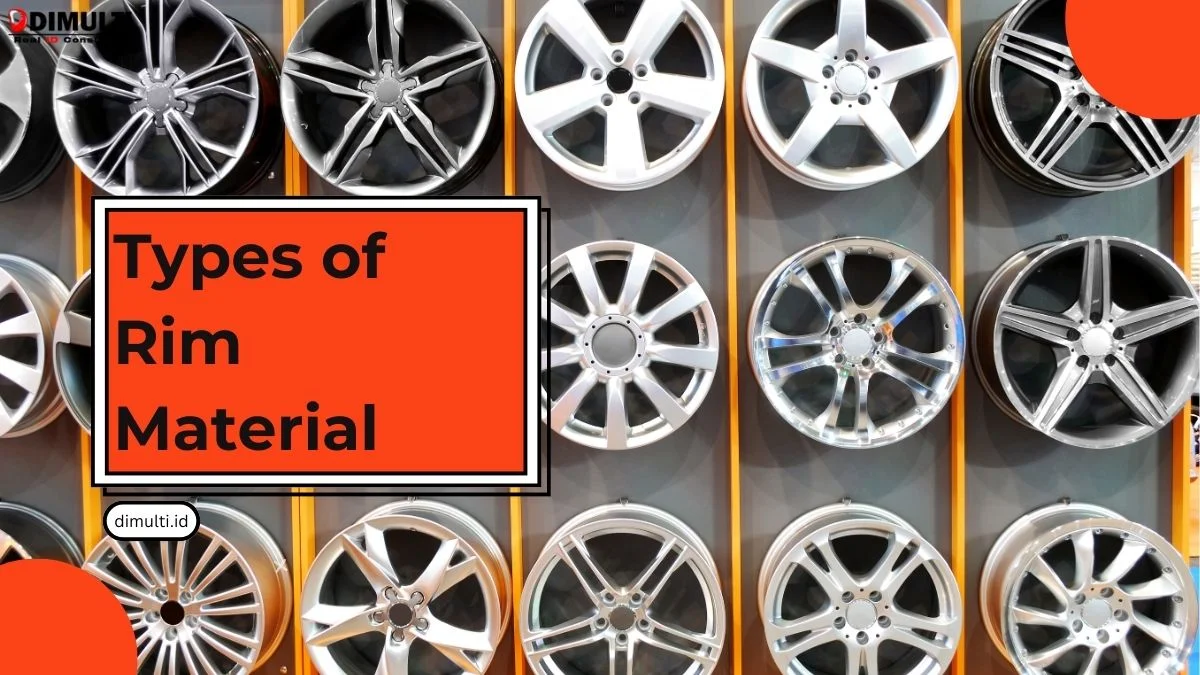
Types of Rim Material – Rims are one of the most important components of a vehicle, not only serving to support the tires but also playing a major role in the handling and overall performance of your car.
And on top of that, car rims also have a HUGE impact on the overall appearance of your car, ‘cause let’s be real, who doesn’t like having a car with cool and eye-catching rims, right?
However, choosing the right rims can be confusing as there are different types of rim material available in the market.
Also Read


From solid metal wheels to premium fancy pants carbon wheels, and also, each material has its own advantages and disadvantages.
So, how can you make the most suitable choice for your vehicle? In this article, we will discuss the different types of alloy wheel materials, explain the pros and cons of each, and help you find the wheels that not only fit your car, but also suit your lifestyle and budget. Let’s take a look!
Types of Rim Material

1. Steel Rim
One type of alloy wheel that is widely used is the steel-based alloy wheel. These wheels are made from a combination of iron and carbon.
As we all know, steel wheels are the types of rim material that well known for their high strength, making them a solid choice for many different types of vehicles.
However, like all automotive components, steel wheels also have advantages and disadvantages that need to be considered before you make a decision.
Here are some of their pros!
- Strength and Durability: Steel wheels are known to be very strong and durable. This is because steel is a sturdy material and can withstand heavy loads and impacts well. That’s why steel wheels are often used on large vehicles such as trucks or SUVs that require extra strength.
- Affordable Price: Steel wheels are typically less expensive compared to wheels made from other materials such as aluminum or magnesium. This makes them an economical choice, especially for older vehicles or for applications that don’t require high performance.
- Easy Maintenance: Steel rims are generally easier to maintain and don’t require as much attention as rims made from more expensive materials. In the event of unfortunate damage, steel rims are also easier to repair.
- Easy to Find: Steel wheels are one of the most common types of wheels and come in a variety of sizes, making it easy to find replacements or upgrades.
But, you should consider these cons before you’re planning to use steel rims as a shoe of choice for your beloved ride.
- Weight: Having a great strength also comes with a little bit of problem for the steel rims. The steel rims are usually heavier than other rims with different materials, this can affect the overall performance and your fuel efficiency as the heavier rims meaning your car’s engine needs extra effort to move those weight.
- Not really good-looking: We all know the steel rims are not the prettiest among other types of rims, right?
- Prone to corrosion: The steel rims are also prone to corrosion due to the steel characteristics, this can be troublesome especially when the rim is not properly painted or coated with anti-corrosion materials.
2. Aluminum Rims
The next one is the aluminum rims. Aluminum rims are a popular choice among modern car owners and are a replacement for the steel wheels that used to be widely used on older cars.
These wheels are made from an alloy of aluminum and silicon, which provides a number of advantages over steel wheels.
However, like all options, aluminum alloy wheels also have some pros and cons to be considered.
First, here is a breakdown of the advantages of aluminum alloy rims:
- Lightweight: One of the main advantages of aluminum alloy wheels is their lightweightness. This helps improve the fuel efficiency of your car as the engine doesn’t have to work as hard to move heavy wheels. And not to mention that lighter wheels can improve the handling and performance of the vehicle.
- Flexible Design: Aluminum alloy wheels are highly malleable and can be produced in a variety of attractive designs and shapes. This allows manufacturers and you to choose from a variety of designs and sizes according to your taste and needs.
- Durability and Corrosion: Aluminum rims have good resistance to corrosion, especially when coated with a protective layer. This helps maintain the appearance and durability of the wheels in the long run, although they still require regular maintenance, though.
And here are some disadvantages of aluminum rims!
- Varying Prices: While there are affordable aluminum alloy wheels, the price can vary significantly depending on the model and design. High-quality aluminum rims and custom designs are often more expensive, which may not fit into everyone’s budget.
- Relative Strength: While aluminum wheels are strong and durable, they can be more susceptible to damage from heavy impacts compared to steel wheels. Aluminum wheels can suffer cracks or dents if they are hit hard enough.
- Require Special Care: Although aluminum alloy wheels are corrosion-resistant, they may require special care to maintain their appearance and durability. For example, the protective coating needs to be well maintained to avoid damage from water or chemicals.
Also Read: “Types of Rim Manufacturing Process“
3. Carbon Rims
Carbon fiber wheels are one of the premium choices of rims in the automotive world for you mr fancy pants around there, renowned for their advanced use of materials and extremely high performance.
Carbon fiber, which is also often used in supercar body components, provides a number of unique benefits in the manufacture of alloy wheels.
However, like all types of alloy wheels, carbon fiber wheels also have some drawbacks. Here is an in-depth review of the pros and cons of carbon fiber wheels:
Pros:
- Very Light Weight: One of the most prominent features of carbon fiber wheels is that they are extremely light in weight. Carbon fiber is a very light yet strong material, which can help reduce the overall weight of the vehicle. This can improve fuel efficiency and handling performance as it reduces the mass that the vehicle has to move.
- High Strength and Durability: Carbon fiber wheels are known to be extremely strong and durable. They have an excellent strength-to-weight ratio, making them ideal for high-performance applications. In addition, carbon fiber is highly resistant to stress and impact, and does not deform easily.
- Weather-proof: Carbon fiber has excellent resistance to extreme weather conditions, including humidity, high temperatures, and UV exposure. This makes carbon fiber wheels durable and not easily damaged despite being used in various environmental conditions.
- Modern and Aesthetic Design: Carbon fiber wheels often have a very modern and stylish look, with the carbon fiber pattern creating an interesting visual effect. These designs are often sought after by car enthusiasts who want to give their vehicles an exclusive touch.
Cons:
- High Price: One of the main drawbacks of carbon fiber wheels is that they are very high priced. The manufacturing process and the carbon fiber material itself is expensive, so carbon fiber wheels are usually one of the most expensive options on the market. This can be a limiting factor for many people who are on a budget.
- Long Manufacturing Time: The manufacturing process of carbon fiber wheels takes longer than wheels made from other materials such as steel or aluminum. Carbon fiber must be specially coated and processed, which can add to production and shipping time.
4. Magnesium Rims
The last on our list of types of rim material is the magnesium rims which are one of the most common types of wheels in racing and motorsport.
Magnesium, as the main material of the rims, offers some specific advantages in terms of performance, but it also has some drawbacks that are worth noting.
Here’s a review of the pros of magnesium alloy wheels:
- Excellent Strength and Durability: Magnesium wheels are renowned for their high strength while still maintaining a relatively light weight. Magnesium has an excellent strength-to-weight ratio, making these wheels ideal for high-performance and racing applications where strength and weight are critical.
- Reduces Friction and Heat: Magnesium alloy wheels are good at absorbing friction and heat generated from the brake system. This helps reduce the risk of overheating and ensures more stable braking performance during high-intensity riding.
- Shock Resistance: Magnesium wheels are designed to withstand heavy shocks and stresses, making them a popular choice on the racetrack. This ability is especially useful in extreme situations, such as racing on circuits with many sharp turns and uneven surfaces.
- Design and Aesthetics: Magnesium wheels often have a sleeker and more elegant design, and provide a more premium look compared to wheels made from other materials. This can be a plus for us petrol heads looking for components with standout aesthetics.
And here’s some drawbacks of the magnesium rims:
- Expensive Price: Magnesium wheels tend to be more expensive compared to wheels made from other materials such as aluminum or steel. This price can be a limiting factor for many people who do not use their vehicles for racing or high-performance applications.
- Prone to Corrosion: One of the main drawbacks of magnesium rims is their tendency towards corrosion. Magnesium can oxidize and rust if exposed to moisture or salt, so it requires additional protection and regular maintenance to maintain its condition.
So there you have it! The types of rim material to choose for your favorite ride!
So, having a nice, mean-looking rim for your ride indeed looks cool.
But, it is wise to choose the quality rim for the sake of your safety. So, how do you identify the quality rim and the low-quality one?
Well, as for in Indonesia, it’s easy to spot one, just check the SNI logo on the rim to make sure it’s already been tested for its safety and quality.
The SNI certification itself is a type of product approval applied in Indonesia for most if not all of the products sold and distributed in Indonesia.
And yes, this includes a car’s rim, as it is clearly stated in not one, but two regulations, which are the SNI 1896:2008 and SNI 4658:2008.