

What are the 7 common types of flanges? There are slip-on flanges, weld neck, blind, threaded, and many others!
But, have you ever heard about what a flange is? A flange is a part that is usually a flat ring or a disc-shaped plate mounted at the ends of pipes, tubes, or other equipment.
Then, what’s the use of the flange? Flanges are often used in a variety of applications in industry, especially in welding systems.
Also Read


So, in today’s article at dimulti.id, we will further discuss the definition of flange alongside with the 7 most common types of flanges. Stay tuned!
What is a Flange?
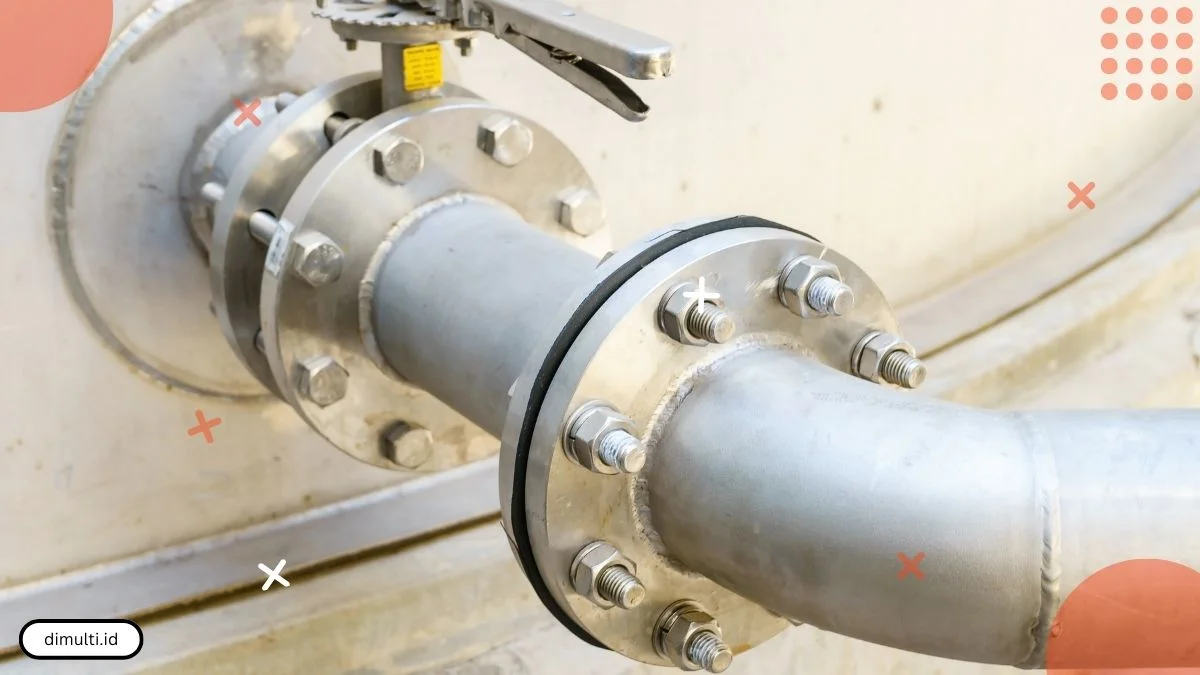
Flange is one of the tools used on a pipe as a tool for connecting two pipes or parts of equipment that have a flat end.
Flange allows a solid connection but can be easily disconnected to facilitate maintenance or repair.
Other than that, the flanges of a particular type, such as flanges with a rolling hole or flange equipped with a cover, can be used to provide access to a plumbing system or equipment.
Also Read: “5 Types of Pipes Used in Construction“
Types of Flanges
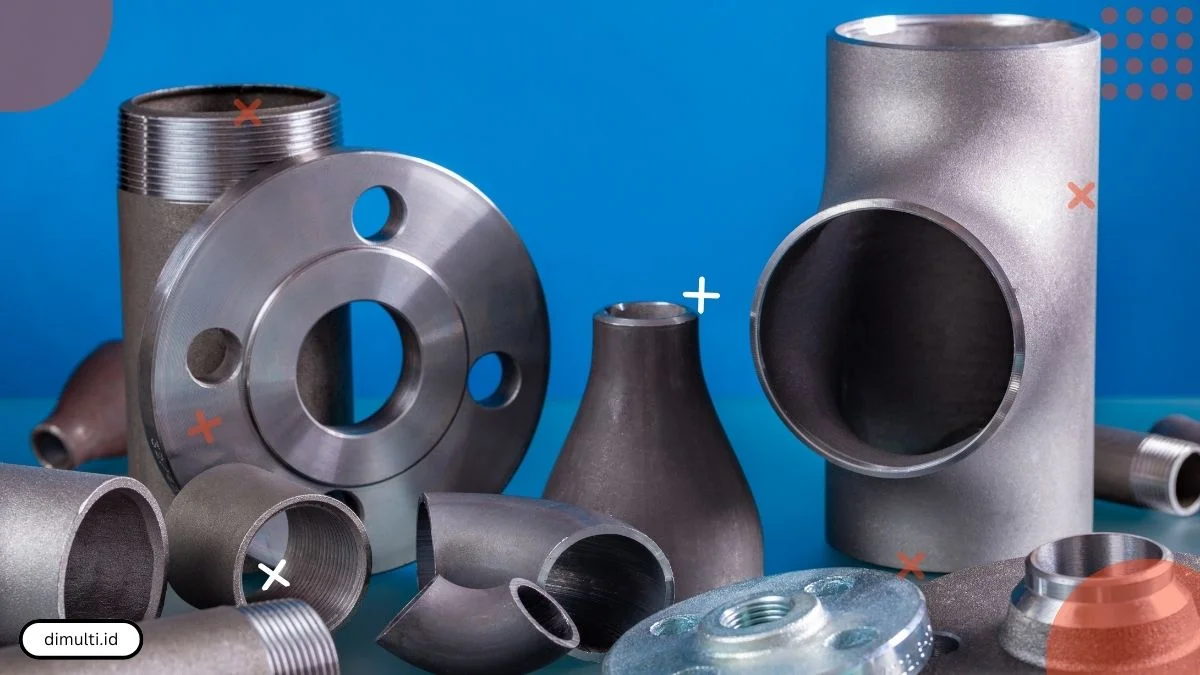
1. Slip-On Flange
Slip-On flange is a type of flange that is used to connect two pipes or equipment by matching them to the end of the pipe or equipment to be connected.
Slip-On flanges have a fairly simple design. They are usually ring-shaped with a middle hole that matches the diameter of the pipe to be connected.
In the inner part of the flange, these holes will be larger than the outer diameter to allow the pipes to slip into the flange.
2. Weld Neck Flange
The next one is the weld neck flange that has the longest neck and is designed to be welded on the pipes or equipment.
This type of flange is very strong and suitable for applications with high pressure or high temperature.
And because of its strength, the flange weld neck is mostly used in applications that require strength and high resistance to pressure and high temperature.
Weld neck has a long neck that helps distribute pressure well into the pipe and reduces the risk of deformation.
3. Blind Flange
Blind flange or blind disk flange is a flange used to close the end of a pipe or pipeline.
Blind flange is often used when access to the system needs to be restricted or when inspection or maintenance is required.
Blind flanges are commonly used in a variety of industries, including oil and gas, chemical, petrochemical, and power plants.
They are used wherever there is a need to close the ends of pipes, valves, or equipment, or when pipes need to be temporarily blocked.
4. Threaded Flange
Threaded flanges have a rolling hole around them and are used to connect pipes or accessories that also have rolling threads and are usually used in low-pressure systems.
The main function of the threaded flange is to connect two pipes or equipment in a safe and removable way.
They are used in situations that require strong connections, but should also allow for the ease dismantling of the pipes.
5. Socket Weld Flange
The next on our list of “types of flanges” is the socket weld flange that’s designed to be connected to a pipe using a welding socket.
They are suitable for applications with high pressure and temperature as the socket weld provides extremely strong connections and is resistant to high pressures and high temperatures, as well as vibration and shock resistance.
But bear in mind that the installation of flange socket weld requires good welding skills, and may require additional costs for proper welding.
6. Spectacle Blind Flange
Blind spectacle flanges are used to isolate or shift the flow of the fluids.
They have two layers, which can be reversed to each other to close or open the flow path. Blind spectacle flanges have a unique design with a “lens”-shaped disc that can be rotated.
These discs are usually mounted between two standard flanges. The discs have holes that match the diameter of the pipe to be connected and when the disk is rotated in a certain way, the holes can be closed or opened.
7. Lap Joint Flange
The last but definitely not least is the lap joint flange that is often used in systems where flange replacement is often required.
This type of flange allows the pipe to slip freely under the flange, making it easier to replace the flanges without having to cut the pipes.
The flap joint flange also can be made of a variety of materials, including carbon steel, stainless steels, alloy steel and various other materials according to application requirements and environmental requirements.
Also Read: “7 Types of Plumbing Pipes“
So there you have it, the explanation of the types of flanges that we’ve prepared just for you!