What are the different types of air filters and what are its pros and cons? With improved air quality being one of the mandatory things in our life, knowing and understanding different kinds of air filters might help you to achieve a better air quality!
Indoor air quality is a crucial element for us, especially if one of your family members has respiratory problems.
The proper air filtration will help improve your overall health and with the increased healthiness you can go on and be more productive!
Also Read


So, without further ado, let’s talk about the different types of air filters!
Table of Contents
Types of Air Filters

1. HEPA Filters
HEPA filters or commonly known as the High-Efficiency Particulate Air filters are one of the most effective air filtration systems to be used in your household.
The HEPA filters are able to remove at least 99,97% of airborne allergens and pollutants such as dust, molt and spores that are as small as 0,3 microns.
If you or any of your household members have any respiratory issues, you can gain a lot of benefits with this type of air filter.
Here are the pros and cons of HEPA filters:
Pros
- Better Filter Design: With the filtration up to 0,3 microns, the HEPA filters can capture tiny particles such as dust mites, pollen, mold spores, and pet dander, this can be a huge benefit to allergy and asthma sufferers.
- Long-lasting Performance: HEPA filters typically last 2-3 years, requiring fewer replacements.
- Produces No Byproducts: Ionizers, PECO, and ozone are examples of other air cleaning technologies that release toxic byproducts into the atmosphere. In contrast to its rivals, HEPA only filters the air but it doesn’t introduce any additional byproducts.
- Commonly Available: The HEPA filters can be found easily in a variety of home appliance stores.
Cons
- More Expensive: HEPA filters come at a premium compared to standard filters.
- Difficult to Clean: Accessing and cleaning the HEPA filter on your air purifier may be challenging due to its size and design. While certain HEPA filters can be washed, some are not. Also, mold development and moisture buildup might result from a filthy filter
“Also Read: “Understanding The Different Stages of an Air Purifier“
2. UV Filters
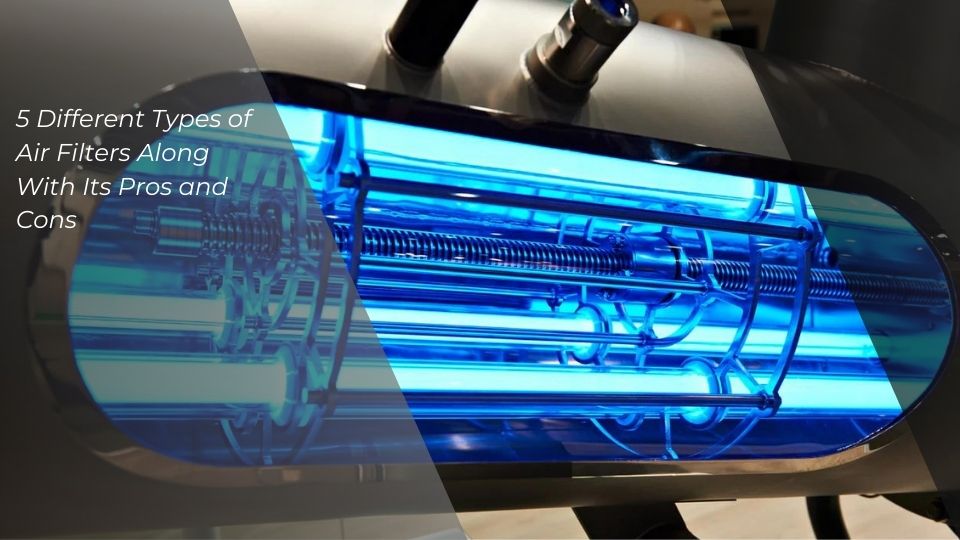
As its name implies, the UV filters use a short-wave ultraviolet light to kill bacteria and viruses. The bacteria and viruses will be killed by the UV lamps and germicidal radiations when the air passes through the HVAC unit.
Other than that, UV filters are excellent for killing microorganisms that could be hazardous to your health, including mold spores.
UV filters may have the consequence of turning oxygen into ozone, which is harmful to human health. Even low amounts of ozone can cause coughing and chest pain, while higher amounts of it can lead to worsening of existing respiratory diseases, like asthma.
While UV filters are excellent at getting rid of bacteria and viruses, they are less effective in keeping out airborne contaminants like dust and most commonly function as a component of larger filtration systems that also contain the HEPA air filters.
Pros
- Wider Filtration: UV filters can effectively kill bacterias, viruses and mold spores giving you a benefit especially if you’re sensitive to certain microbes and or have a compromised immune systems
- Low Maintenance: The UV light bulbs usually last for years.
- Silent: The UV air filters generate no noise.
Cons
- Limited Filtration: Although the UV filters can kill bacteria and viruses it won’t remove dust, pet dander, pollen or any other allergens. They’re also ineffective against gasses, fumes and cigarette smoke.
- Ozone Emission: UV air purifiers can generate ozone that can cause a lung irritant, as its byproduct.
3. Electrostatic Filters
The electrostatic filters are types of air filters that work by creating static electricity from tiny cotton and paper fibers, which attracts dust and other airborne particles.
They are the great options if you need a filter that can effectively block allergies because of its powerful magnets, which prevents these particles from moving throughout your house.
Also, the electrostatic filters are both disposable and reusable, you can either wash and reuse the filters or you can simply toss them and get a new one
Pros
- Cost-Effective: The main strength of electrostatic filters is its cost-effective nature. unlike disposable filters, electrostatic filters are washable and reusable, saving you money in the long run.
- Minimal Maintenance: They require regular cleaning, but not as frequent replacement as disposable filters.
Cons
- Limited Protection: Larger pollutants, like dust or mold spores, may be difficult for this filter to filter, even though it can manage smaller ones. Because of this, electrostatic filters are not a good option for anyone with respiratory problems.
Also Read: “5 Types of Air Conditioner“
4. Spun Glass Filters
Spun fiberglass filters are a common and affordable option for HVAC systems. They are disposable and protect your equipment from debris. While effective for basic dust and allergen capture, they don’t excel at air purification.
For those with respiratory issues or seeking significant air quality improvement, you might need a more advanced filter.
Pros
- Budget-Friendly: Spun glass filters are the most affordable type of air filter.
- Disposable: They require no cleaning, simply replace them when dirty.
Cons
- Limited Filtration: Spun glass filters have large pores, allowing smaller particles like allergens, pollen, and even some mold spores to pass through. This makes them unsuitable for allergy sufferers or those seeking improved indoor air quality.
5. Pleated Filters
Pleated filters in HVAC systems are made of either cotton folds or polyester fibers. The MERV rating of pleated filters ranges from 5 to 13.
They offer low air filtration and are less resistive to airflow, despite their ability to effectively filter dust and other airborne pollutants.
These filters have an advantage over non-pleated ones because of their pleats, which improve filtration by increasing the surface area of the filter.
More pleats in a filter mean stronger filtration than fewer pleats in a filter, which can capture even tough allergens and pollutants like mold spores and pet fur.
Pleated filters can be used to reduce HVAC fan noise and are offered in both reusable and disposable forms.
But, the pleated air filters have one drawback as it can make your HVAC system work a little bit harder to pull air through the unit, thus resulting in a decrease in efficiency of your HVAC systems sooner than expected.
Pros
- Improved Filtration: The pleated design increases surface area, allowing them to capture a wider range of particles compared to spun glass filters. This includes dust, allergens like pollen and pet dander, and even some mold spores. This makes them a good choice for those with mild allergies.
- Longer Lifespan: Pleated filters typically last 2-3 months before needing replacement, offering a better balance between cost and maintenance compared to spun glass.
- Cost-Effective: While more expensive than spun glass, pleated filters offer more value due to their longer lifespan and improved filtration.
Cons
- Higher Initial Cost: Pleated filters have only one drawback, which is their expense. They are among the priciest solutions available. But they’re also a fantastic method to obtain value for your money.
So there you go the 5 types of air filters to be used in your home.
The indoor air quality is an important aspect to be considered, to have healthy and clean air can reduce a lot of respiratory problems.
So, with that being said, you’ll need the air filter that has been certified by the SNI certification. This certification ensures that the air filters that you use are already up to Indonesian standards.
Thus, the quality and safety aspects of your air filters can be held accountable.
Also, if you’re a distributor or business owners that want to distribute or sell your air filters products, you’ll also need the SNI certification for air filters to further gain Indonesian market’s trust.