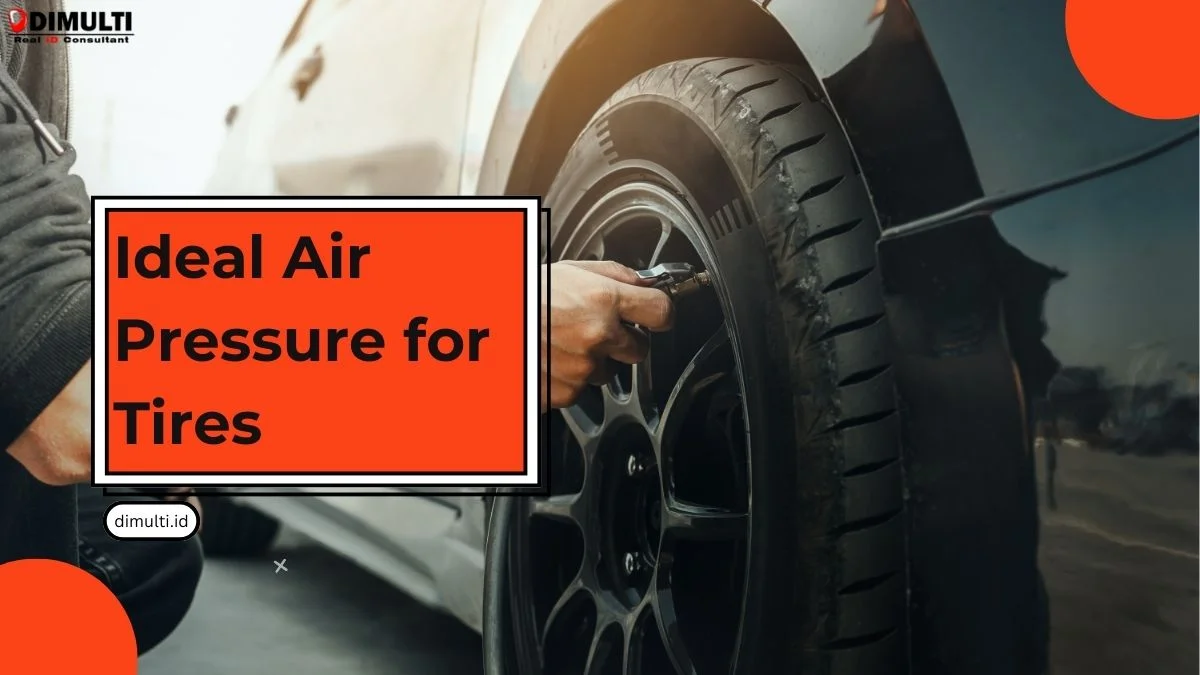
Ideal Air Pressure for Tires – Who doesn’t want to experience a smooth and safe ride? Behind the comfort of driving, there is a crucial part that is often overlooked: the tire air pressure.
If you have ever felt unusual vibrations or sensed that your vehicle is not stable enough, then there is a good chance that the tire pressure needs to be checked.
But don’t worry, this article will fully explain the ideal air pressure for tires and how it can affect your driving experience.
Also Read


Let’s check out the full explanation down below!
Ideal Air Pressure for Tires

As an important part of vehicle maintenance, understanding the correct tire pressure is a step that should not be overlooked.
Please note that car tire pressure units generally use Psi (Pound per Square Inch) or one pound per square inch as its standard measurements apply in many countries.
Here is a list of recommended tire pressures for different types of vehicles that you need to know:
1. MPV (Multi-Purpose Vehicle)
Multi-Purpose Vehicle (MPV) cars usually have an ideal tire pressure that ranges between 33-36 psi (pounds per square inch) for front and rear tires.
However, it is advisable to refer to the manufacturer’s recommendations which may differ depending on the make and model of the car.
Using air pressure in accordance with the manufacturer’s recommendations will help maintain the balance and performance of the vehicle.
Also Read: “Different Types of Motor Vehicle Tires“
2. City Car
City cars generally have an air pressure range between 30-36 psi for front and rear tires.
As with MPVs, you need to check the vehicle manual or manufacturer’s recommendations to get the right values.
This will help you avoid using inappropriate tire pressure and affecting your car’s performance.
3. SUV
SUVs (Sport Utility Vehicles) generally require slightly higher tire pressure. The common tire pressure range is between 34-38 psi for front and rear tires.
That said, make sure you refer to the guidelines provided by your vehicle manufacturer. This will help ensure optimal vehicle stability and performance.
4. Sedan
Sedan cars have a relatively wide variation in tire pressure. Typically, an air pressure between 30-33 psi is standard for both front and rear tires.
However, refer to your vehicle’s manual to ensure that you are using the recommended tire pressure. This will help maintain the balance and grip of the tires on the road surface.
How to Determine an Ideal Air Pressure for Your Car’s Tires

Knowing the ideal pressure for your tires plays an important role in maintaining the balance, performance and overall safety of your vehicle.
The right tire pressure not only affects driving comfort, but also fuel efficiency and tire life.
In order to identify the appropriate tire pressure size, there are a few steps you can follow.
1. Follow the Manufacturer’s Recommendations
First, choosing a tire pressure size that matches the manufacturer’s recommendation is the easiest and most accurate step to ensure optimal vehicle performance.
Each car manufacturer has conducted a series of in-depth trials and research to determine the most suitable tire pressure for each of their car models.
The tire pressure recommended by the manufacturer is usually based on various factors, including the vehicle weight, load distribution, and tire characteristics.
Also Read: “Best Tire Brands in The World“
2. Consider the Weight of Your Car
Next, consider the vehicle load factor. Both the initial weight of your car and if you are carrying a heavy load, such as additional passengers or luggage.
Routinely checking the tire pressure is important, at least once a month, to ensure optimal tire balance and performance.
3. Pay Attention to the Ambient Temperature
Don’t forget to pay attention to the ambient temperature as well, as temperature can affect the air pressure in the tire.
Generally, cold weather can affect the tire pressure causing it to drop by about 1 psi for every 10°F drop in temperature.
In contrast, the hot weather can cause the tire pressure to increase, so it is advisable to check your tire pressure regularly to avoid over-inflation.
But, if you are still unsure, then consult an automotive expert or mechanic if you still feel confused or want to get further guidance.
Through these steps, you can ensure the ideal tire pressure size, improve comfort, and keep your vehicle in the best condition.
4. Consider the Road Surface Quality
This thing also needs to be considered when adjusting your tire pressure.
If the road that you use daily is generally rougher, you might want to slightly lower the tire pressure to improve traction and provide a smoother ride.
You can lower the tire pressure by 5-10 psi from the manufacturer’s recommended level.
But if the road that you use daily is generally smoother, you can keep your tires inflated to the manufacturer’s recommended pressure.
So there you have it! An ideal air pressure for tires and also the things that you can do to determine it!