
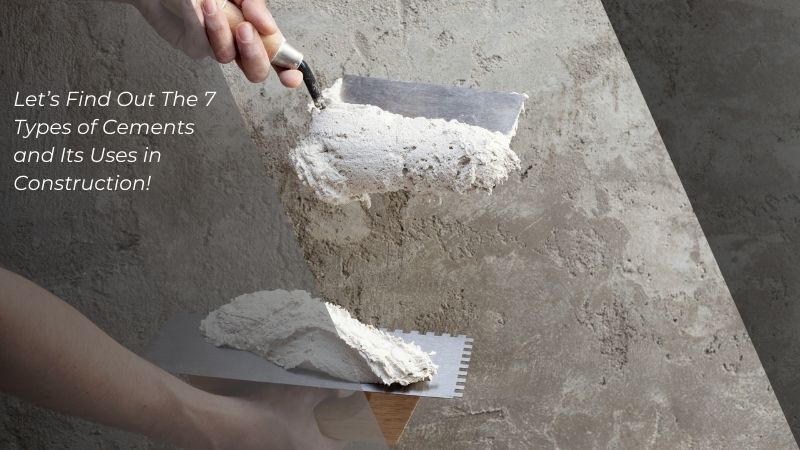
Types of Cements? Yup! Do you ever wonder that there are several different kinds of cement in construction?
Cement is used to glued together building materials like stone, brick or other building materials.
Cement is a fine powder-like building material made from a mixture of limestone, silica and other materials.
Also Read


The step of making cement itself consists of several steps including mining, destruction, mixing, initial smoothing, heating, cooling to final smoothing and then packed as we often find.
But do you know the cement itself has different qualities and specifications depending on its uses and type of building it’s used for?
Yup! Different kinds of infrastructure require different types of cements, here are the most common types you’ll likely find in your local hardware!
Types of Cements
1. Portland Cement
The first one and also the most commonly used one is the portland cement. It has a gray and blue-ish color, and is typically used for houses or tall buildings.
The portland cements itself further divided by 5 types, including
- Portland Cement Type I: Can generally be used in construction of buildings that do not require special requirements for heat hydration and initial compressive strength. It is commonly used for residential houses, floors and highways and is suitable for use in construction sites that are far from the coast and with low sulfate levels.
- Portland Cement Type II: Can generally be used as a building material that is placed on the shores of the sea, slums, ponds, docks and dams. They are resistant to sulphuric acid levels of 0.1-0.2 percent and moderate heat hydration.
- Portland Cement Type III: This type of cement has a high initial compressive strength and a fast dry that is usually used on high-rise buildings, concrete roads, highway and airports and in-water buildings.
- Portland Cement Type IV: Generally requires low hydration heat and usually requires a short hardening process time to avoid cracks. They are often used for dams and airfields.
- Portland Cement Type V: Usually used for construction of buildings that require high resistance to sulphuric acid of more than 0.2 per cent such as in reservoirs, seawaters, coasts, mining areas to nuclear power plants.
2. Portland Composite Cement (PCC)
This type of cement is very common as a gluing material for general concrete construction, bricks installation, precast concrete, prestressed concrete, paving block and so on.
They are usually easier to work with, waterproof, sulfate resistant and not easy to crack. This PCC (Portland Composite Cement) material consists of crust, gypsum and other inorganic materials.
Also Read: “Construction Safety Equipment“
3. Super Portland Pozzolan Composite Cement (PPC)
This type of cement is used as a mass concrete construction, construction on the coast and slopes that have resistance to sulfate and moderate heat hydration.
The types of buildings that use this type of cement including housing, highways, gates, irrigation and so on. This cement consists of slag, gypsum and pozzolan.
4. Oil Well Cement
These cement are used in oil drilling and are resistant to high sulfate content and are specifically made for certain depths and temperatures that are adjusted to the speed of cement hardening. This cement is used in oil wells under the surface of the earth and the sea.
5. White Cement
White cement is a type of cement that has low levels of iron and magnesium, thus making it the color white.
Made from the primary material of pure limestone calcite and can be used as a filler especially for decorative purposes, such as exterior finishing, fine plastering, and the manufacture of architectural elements.
White cement is also used in the manufacture of mosaics and ceramics.
Also Read: “Benefits of Using Sheet Piles in Construction“
6. High Alumina Cement (HAC)
This type of cement produces concrete with a faster hardening process and is resistant to sulphuric acid. The raw materials for this cement are limestone and bauxite.
7. Waterproofed Cement (WPC)
This type of cement is a mixture of Portland cement with water proofing agents such as calcium, aluminum, and other stearate metals.
This cement is applied to concrete construction that functions to withstand hydrostatic pressure such as chemical liquid storage tanks.
So there you go the 7 types of cements commonly used in construction.
If you are a business owner that’s looking for SNI certification for your cement product, kindly click HERE!