
Pros and Cons of Induction Cooking – Induction cookers are also one type of electric stove. But in general, induction cookers are different from electric cookers in general, especially in how these two cookers heat food.
Induction cooktops use a copper coil, which creates a magnetic current with a pot or pan on its surface.
Instead of passing heat from the surface to the cookware to the food, induction cooktops heat the cookware directly.
Also Read


Induction cooktops look similar to standard glass electric cooktops, but have electromagnetic waves to heat the cookware.
Essentially, they turn pans and pots into their own heat source. This system is highly efficient, allowing for precise control, and rapid temperature increases or decreases.
This temperature regulation usually leads to faster heating, especially for time-consuming cooking activities such as boiling water. Induction cookers can boil water 50% faster than gas stoves and electric stoves
So, that’s the tip of an iceberg for you about induction cooking, dire to explore more about the pros and cons of induction cooking? Let’s find the answer only at dimulti.id!
How Induction Cooking Works?

Induction cookers are electric cookers that use electromagnetic waves to heat cookware without gas.
Unlike gas or electric stoves that transfer heat through conduction, induction cooktops directly heat pots and pans thanks to the electric current flowing through the coils below the surface.
About 90% of the electricity used by induction cooktops is used for cooking, resulting in instant heat and controlled temperatures without wasting power.
With this high efficiency, induction cooktops also keep the kitchen temperature comfortable, as very little heat energy is lost.
Also Read: “How to Clean Glass Stovetop“
Pros of Induction Cooking

After knowing the definition, let’s dive into our main topic which is the pros of induction cooking. Let’s get it down below!
1. More Efficient
Induction cookers use technology that minimizes heat leakage, allowing for fast and efficient heating.
You don’t have to wait long for the cookware to heat up, so the cooking process becomes more practical and the time taken to prepare food can be shortened.
Overall, induction cooking saves up to 15% of energy compared to regular electric stoves, and up to 3 times more efficient than gas stoves.
2. Faster Heating Time
With an induction cooker, cooking will take place faster, and you can even boil water 20-40% faster than gas and electric stoves.
This rapid heating also allows the temperature to be maintained very precisely. The heat released by an induction cooker is easy to control and quite precise; when the cooker is turned on, the heat immediately spreads and reaches the desired temperature.
Conversely, when switched off, the temperature will quickly drop, so food will not over-cook or burn.
3. Easy to Clean
The smooth glass surface of the induction hob allows for quick and easy cleaning, making cooking more practical.
When you’re done cooking, all you have to do is wipe the surface with a damp cloth or sponge to remove stains and food residue.
This is very different compared to traditional gas stoves, which often have crevices and hard-to-reach parts, so cleaning them can become troublesome and time-consuming.
4. Safer
The use of induction cooktops also improves indoor air quality as they do not produce harmful fumes or gasses like gas stoves, keeping the kitchen air clean.
In addition, the risk of burns is significantly reduced, as the cooktop surface cools down immediately after the cookware is removed.
This safety aspect is crucial, especially in homes with children or pets, making induction cooktops a smart choice for a healthier and safer kitchen environment.
Also Read: “How to Choose Camping Stove“
Cons of Induction Cooking
1. Higher Price
The most noticeable drawback of induction cookers is that they are relatively expensive. This is due to the advanced heat source technology and safety systems offered.
Although the initial investment may be high, many users feel that the energy efficiency and ease of use and maintenance offered by induction cookers are worth the cost.
However, for some, this price can be a major consideration before deciding to switch from a traditional stove.
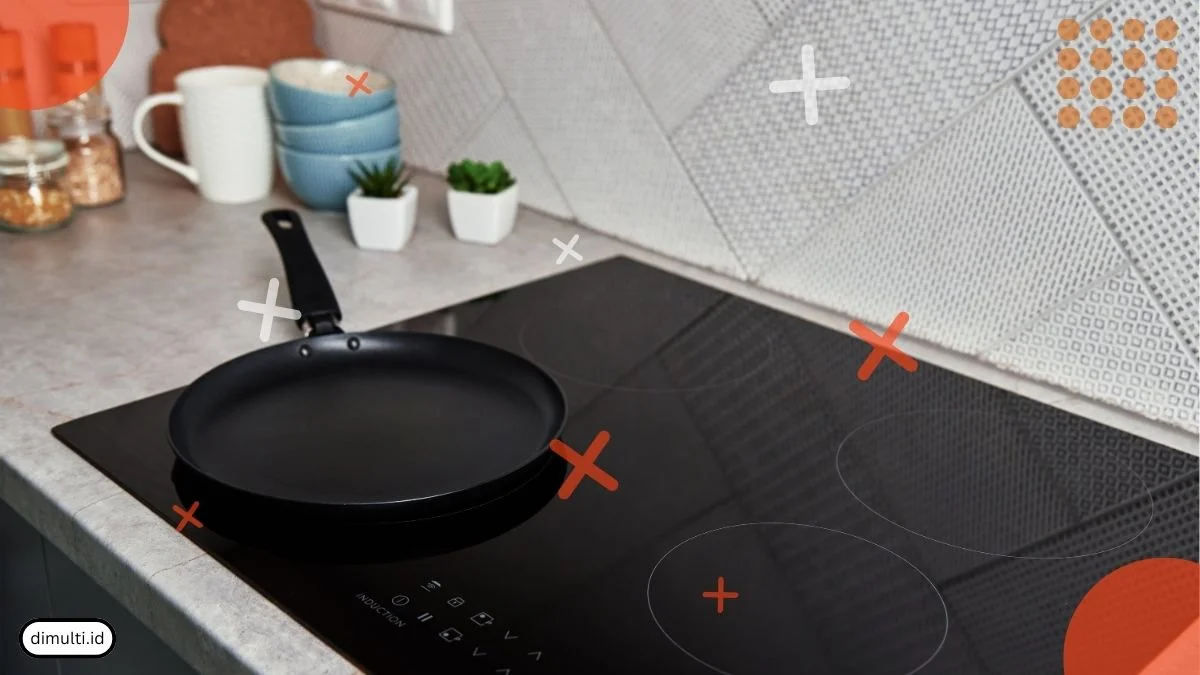
2. Need Special Cookware
Not all types of cookware can be used on induction cooktops.
First, the bottom of the pan or pot must be flat so that it can make maximum contact with the surface of the stove.
Secondly, the material must contain magnetic elements so that it can react with the electromagnetic energy generated.
Fortunately, most of today’s high-quality cookware is already compatible with induction cooktops, so you don’t have to worry about finding suitable equipment.
3. Generates Unfamiliar Sounds
Induction cookers can produce a buzzing sound when used at high power. This sound occurs because the high heat setting makes the components inside the stove work harder.
For those of you who may not be used to it, this noise may sound a bit strange, but it is part of how induction technology works.
Although it can be a little bit annoying, this sound usually does not indicate a problem and will decrease when the heat setting is lowered.
So there you have it! The pros and cons of induction cooking that we’ve summarized just for you!