
What are the types of handsaws to choose for your next DIY projects? Let’s take a look at the description and explanation that we’ve prepared just for you!
The handsaw is a reliable tool to be used in many DIY projects, its ability to cut different materials makes it a staple tool in many households.
The handsaw is also divided by several types with each type serving a different purpose to one another.


Understanding the different types of handsaws is so important to determine what saw to choose for a certain project.
So, let’s take a look at the explanation of different types of handsaws down below!
Types of Handsaws
Handsaws are human-powered cutting instruments that are usually made up of knives mounted on an ergonomic frame or handle.
These knives mostly have sharp teeth that are designed to cut different kinds of materials, such as wood, plastic, metal, and so on.
The main advantage of the handsaw is their high portability, so you can easily take them to different workplaces.
In addition, handsaws are also more affordable than electric or power saw. However, the use of handsaw usually requires specialized skill to get precise results.
1. Crosscut Saw
Crosscut saw, as its name suggests, is used to do cross-cut cuts on wood fibers. The teeth on this saw are designed to provide clean and precise cutting results.
The crosscut saw is ideal for cutting wood, board, or beam with flat edges. This tool is also often used in construction work and wood crafts.
2. Keyhole Saw
The keyhole saw is a tool specially designed for cutting small holes or hard-to-reach areas.
The keyhole saw has a thin knife and a sliding tip that allows you to cut accurately in places that are hard to reach.
It’s very useful in installation work, like installing an electrical switch or installing a door lock.
3. Coping Saw
Coping saw is a tool used to cut curves or complicated shapes on wood or other lightweight materials. This saw has a thin knife and a rotatable tip, so it can help you to follow complex patterns.
The saw coping saw is often used in woodworking to make decorative details or curved-shaped pieces.
4. Hacksaw
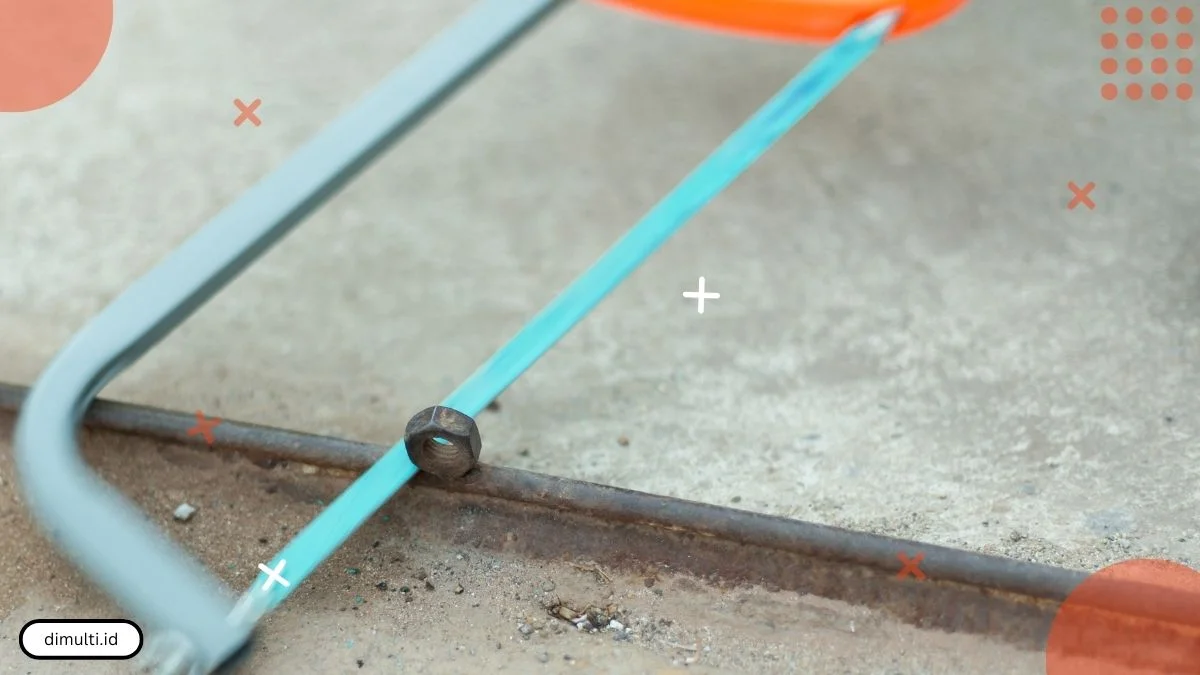
This type of handsaw has similar shapes to the coping saw, but has closer saw teeth than other saw types.
Usually, a hacksaw is used to cut the pipe and plastic material. When the hacksaw’s tooth is dull, you need to replace it with a new one.
Also Read: “SNI Certification for Electric Saw in Indonesia“
5. Dovetail Saw
A dovetail saw is a small backsaw with a thin blade, fine teeth, and a straight handle that’s used for precise cuts, such as making joints.
Dovetail saws are similar to tenon saws, but have thinner blades with more teeth per inch. The teeth on a dovetail saw are often cut in a rip configuration, which allows the saw to cut down through the grain.
The dovetail saw is usually used for cutting wood joints.
6. Drywall Saw
A drywall saw, also known as a jab saw or plasterboard saw, is a hand tool specifically designed for cutting drywall. It’s characterized by a long, narrow blade with a pointed tip and a curved handle.
The drywall saw has a long narrow blade with a pointed tip and curved handle to allow for a precise cutting in tight spaces while providing comfortable grip and control.
The drywall saw is used for cutting wallboard, gypsum and backing board.
7. Pull Saw
A pull saw is a type of saw that, unlike traditional push saws, cuts on the pulling stroke. This means you pull the saw towards you to make the cut.
The main characteristics of the pull saw is the teeth direction that are angled backward designed to cut on the pull stroke.
The saw also usually have thinner and more flexible blades compared to other saws, and due to this, the pull saw usually provides cleaner and more precise cuts.
The pull saw is used for finely cutting wood for molding and trim
So there you have it, the 7 types of handsaws for your next DIY projects!