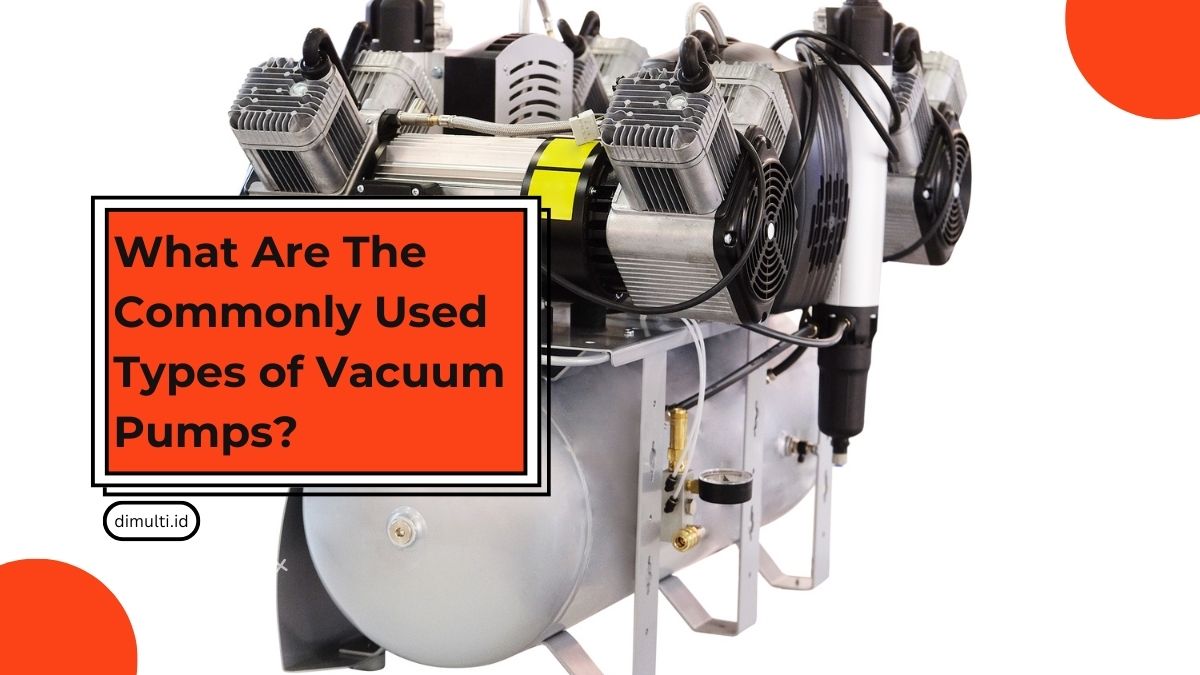
What are the types of vacuum pumps that are commonly used in a variety of industries? Well there are centrifugal, diaphragm, piston and many among others!
As the vacuum pumps are used in a variety of industries, it’s no surprise that there are several different vacuum pump types used.
So what are the types of vacuum pumps? Get the answer along with how each pump works only at dimulti.id!
Also Read

Table of Contents
Types of Vacuum Pumps
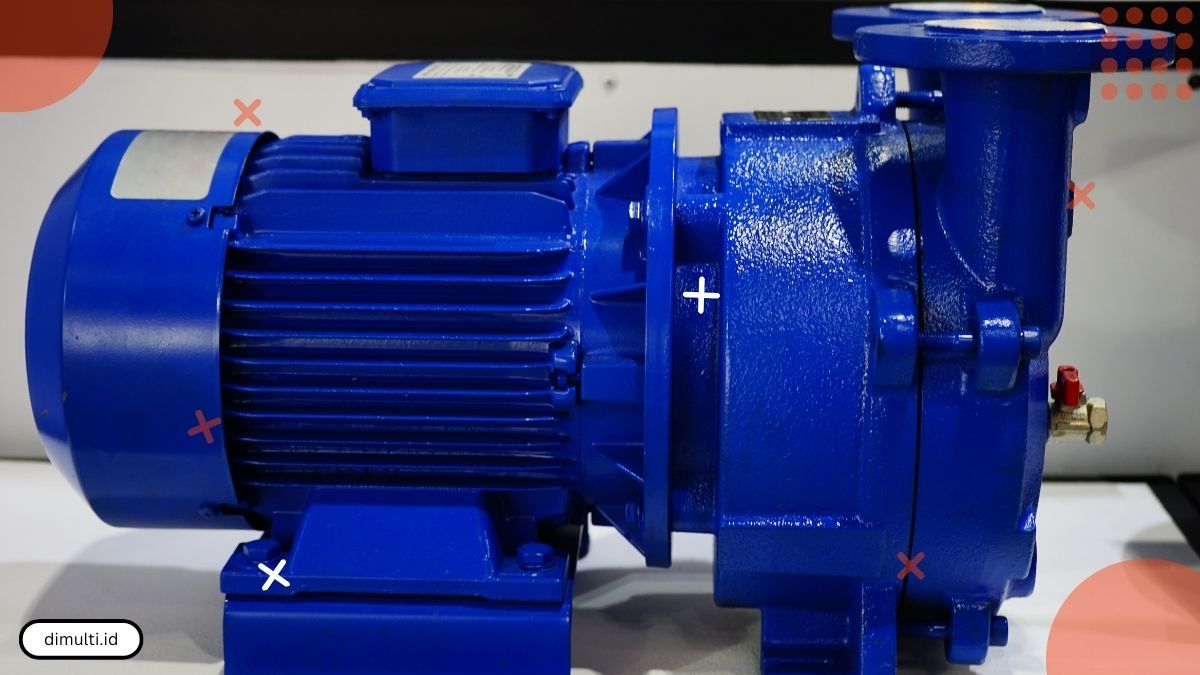
1. Centrifugal Pump
The first one is a centrifugal pump, this type of vacuum pump uses a centrifugal force to suck air out of a closed space.
The centrifugal force is when objects move circularly in a direction that goes away or out of the course of a circle.
In the centrifugal pump, this force is caused by a circular motion of the impeller that are present inside the pump.
2. Diaphragm Pump
These pumps use the up-down movement of the flexible diaphragm to change the volume of the space and create a pressure difference, thus removing air from the space.
3. Piston Pump
The piston pump has a work principle that is similar to the diaphragm pump, but instead of using a flexible diaphragm, it uses a piston.
This pump uses the up-down movement of the piston to pull and push air out of a closed space. The piston functions like a piston pump on an internal combustion engine.
4. Scroll Pump
These pumps use spiral or rotating spiral movements to reduce the volume of space and generate vacuum.
These machines are generally used in applications where noise and contamination should be minimized.
5. Turbomolecular Pump
These pumps use high-speed rotors to suck and remove gas molecules. They are often used in situations where very low pressure is required, such as in high vacuum research laboratories.
6. Liquid Ring Pump
Liquid Ring Pump operates by forming a liquid ring in a rotating case.
Some of these liquid rings are always in a liquid state, while others rotate to form a toroidal movement (similar to a ring) when the pump rotates.
The liquid used in the Liquid Ring Pump can be water or other liquid. This liquid helps in the process of formation of the liquid ring needed to create the vacuum pressure.
7. Sump Pump
Sump pumps are a type of water pump that are specially designed to remove water from low places, such as wells or dams.
Basically, the pump serves to prevent flooding in underground areas, like a basement in a house or a utility room in a building but it can also serve as a vacuum pump.
Also Read: “What is a Vacuum Pump?“
How Does Vacuum Pump Work?

The way a vacuum pump works can vary depending on its type, but the basic principle is to create a low pressure or vacuum inside a system by removing air or gas from a closed space.
Here is a general explanation of how a vacuum pump works, focusing on some commonly used types of pumps:
- Centrifugal Pumps: Generally, centrifugal pumps use a rotating impeller to suck and remove the air. Centrifugal force is generated by impellers that cause the air or gas to enter the impeller and then be forced out through the exhaust.
- Diaphragm Pump: As the diaphragm rises, the air or gas enters the room behind the membrane, when the diaphragm descends, the air then forced out through the exhaust.
- Piston Pump: The piston pump uses the up-down movement of the piston to change the volume of the closed space, creating a low pressure condition. When a piston rises, air or gas enters the room inside the pump, when the piston descends, the air or the gas is forced out through the exhaust.
- Scroll Pump: A scroll pump uses a spiral movement that rotates to shrink the space and suck air into it. It uses two scrolls or spirals that rotate with one scroll fixed, while the other moves. Air or gas is sucked into this room and forced out as the scroll rotates.
- Turbomolecular Pump: Turbomolecular pumps use rotors that rotates at high speeds, the rotors suck gas molecules from a closed space then direct them in the opposite direction, creating a low pressure condition.
- Liquid Ring Pump: Liquid ring pumps use a rotating liquid ring, forming an air vacuum that sucks and discharges air or gas. Usually using a liquid ring that rotates inside the casing, these liquid rings form a vacuum air that moves along with the liquid.
So, there you have it, the types of vacuum pumps alongside with the explanation of how each vacuum pump works!
Like many other things that are being distributed and sold in Indonesia, the vacuum pump is the thing that needs to be certified by the SNI certification.
The SNI certification is a type of product approval that regulates the safety and quality aspects of a product.
The product that is about to be certified by the SNI certification needs to undergo a series of tests to ensure and determine its quality and safety.
While giving the benefits to the customers of Indonesia a peace of mind knowing that the product they bought has already been tested, the SNI certification also comes with a lot of benefits for business owners alike.
The presence of the SNI logo on your product will boost the trust from the Indonesian market, thus improving your integrity and your business’ position.