
Functions of a Welding Machines – In the manufacturing and construction industries, welding machines have become an irreplaceable backbone.
However, behind their common uses in connecting metals, the welding machine has a much deeper and more diverse role.
From structural strength to accurate precision, welding machine functions cover a wide spectrum from product manufacturing to infrastructure maintenance.
Also Read

The use of welding machines has grown wider, covering applications in a wide range of industries ranging from small manufacturing to large-scale infrastructure construction.
In this article, we will explore the various functions of a welding machines. So, to find out more, take the following explanation!
Functions of a Welding Machines
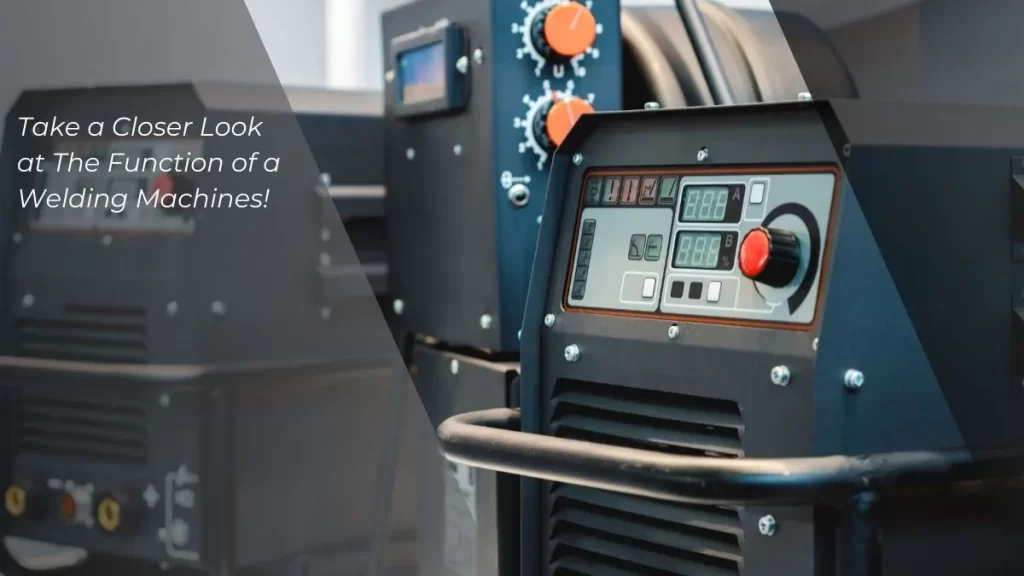
Welding machines work on the basic principle of merging two or more metal materials using high heat.
The main principle in welding machines is to create an electric arc that produces sufficiently high heat to melt the ends of the metal material to be merged.
The process is carried out using a source of electricity, either from direct current (DC) or alternating current (AC), which flows through an electrode or a filling material that then forms an electric arc between the electrodes and the work material.
After the electrical arc is formed, the heat generated will melt the surface of the working material and the electrode, creating a melting point that will then harden to form a strong connection.
These power sources can also be controlled to generate the right heat according to the type of material to be connected.
This principle continues to evolve with technological advances, such as the use of lasers or plasma in welding processes that provide higher speed and precision.
Welding machines have a wide range of functions that are vital to meet a variety of needs, both in manufacturing industry and construction projects.
Also Read: “5 Benefits of Using Welding Machine“
1. Welding Metals
The main process of welding machines is to combine two or more metal materials into one using high heat. This allows for the manufacture of solid and durable metal structures, such as motor vehicles, buildings, and industrial equipment.
2. Fixing and Maintaining
Welding machines are used to repair or reinforce damaged metal components. This allows for efficient maintenance in industry and infrastructure, extending the life of existing equipment and structures.
3. Cutting Metals
Welding machines are also used for high-precision metal cutting. Technologies such as plasma cutting or laser cutting allow quick and accurate cutting on a variety of metal materials, improving the efficiency in the production process.

4. Coating and Painting
Welding machines can be used for coating or painting processes of metal with protective or decorative coatings. This improves the corrosion resistance and aesthetics of the product, making it more durable and visually attractive.
Also Read: “What is a Welding Machine and How Does It Work?“
5. Additive Manufacturing (AM)
Welding machines play an important role in additive manufacturing (AM) technologies, such as 3D metal printing, enabling the rapid and efficient manufacture of complex products, from aircraft components to medical devices, as well as facilitating innovation and the development of new products.
6. Strong Metal Connection
Welding machines can form strong and durable metal connections. The welding process that performed properly can produce connections that have high structural strength that is vital for the safety and reliability of various structures and equipment.

7. Material Engineering
Welding machines can be used to change the structure and properties of metal materials. By using the right welding process, users can achieve a desired properties of metals, such as increased of material strength thus opening up a new opportunities in material engineering.
8. Making a Specifics Components
Welding machines enable the manufacture of specific components with shapes and sizes to suit the needs. This allows for more versatile production that’s adapted to the required specifications, for both industrial needs and specifics applications.
Also Read: “4 Types of Electric Welding Machines“
The welding machine is one of the most versatile and reliable machinery that will bring a lot of benefits.
But you need to choose the high-quality and safety one for your next welding project.
Choose the one with the SNI logo on it as those welding machines are the one that have already been tested for its quality and safety.
The SNI certification is a set of regulations to ensure that every product and services marketed and sold in Indonesia is within Indonesian Standards.
Every product that is about to be sold and distributed in Indonesia must undergo a series of rigorous tests to ensure its safety and quality.
With that being said, the SNI certification is also quite beneficial not only for the Indonesian customers but also for the business owners.
This is because having an SNI logo on your product will further boost the trust of the Indonesian market to your business.
So, if you’re a business owner that wants your product to be certified by the SNI certification, kindly check this link, HERE!